You wake up craving a café-quality cappuccino, but your wallet is still recovering from that last trip to the local coffee shop. The solution? A cheap milk frother California homes and professionals swear by for rich, velvety foam without the premium price tag. The problem is that countless frothers claim to be “budget-friendly” yet fail to deliver consistent results. The answer lies in knowing exactly which features matter most for California’s diverse coffee culture and where to find reliable options that won’t break the bank. In this guide, you will learn how to identify a truly affordable frother that performs like a champion, saving you money and morning frustration
What Defines a Cheap Milk Frother Without Sacrificing Quality?
A cheap milk frother is any device under $50 that consistently produces microfoam or frothy milk for espresso-based drinks. Affordability does not mean flimsy construction; it means smart design that eliminates unnecessary bells and whistles while preserving core functionality. You want a frother that heats milk evenly, creates stable foam, and lasts longer than a few months.
Key Performance Indicators for Budget Brokers
When shopping for a low-cost frother, focus on wattage (300–500 watts for handhelds, 400–600 for automatics), milk capacity (8–12 ounces for single servings), and froth density. A cheap frother should still produce stiff peaks for lattes and creamy foam for cappuccinos. Avoid units with single-speed settings only; two-speed options offer more control.
Materials That Matter Most
Stainless steel heating elements beat plastic ones for durability and even heat distribution. BPA-free plastic bodies are acceptable for the housing, but the whisk or frothing disk should be stainless steel or silicone-coated. Aluminum frothers often rust quickly in California’s coastal humidity, so prioritize corrosion-resistant materials.
Wattage vs. Foam Quality Realities
Higher wattage does not automatically equal better foam. Some 300-watt handheld frothers outperform 500-watt automatics because of paddle design. Test reviews specifically mentioning “microfoam” or “latte art capable” to ensure the cheap frother can handle non-dairy milks like oat or almond—extremely popular in California.
Why Do Californians Need a Specific Type of Milk Frother?
California’s coffee culture emphasizes plant-based milks, cold brew variations, and speed-oriented morning routines. A cheap milk frother must adapt to oat, soy, and almond milk without clogging or overheating. Additionally, many Californians value compact designs for small apartments or home offices.
Plant-Based Milk Compatibility
Oat milk requires a frother with a wider whisk to incorporate air, while almond milk needs a lower maximum temperature to prevent separation. Look for frothers advertising “non-dairy mode” or “cold froth capability.” Cheap frothers without temperature sensors often scorch plant milks, ruining the taste.
Cold Froth for Iced Drinks
California’s warm climate makes iced lattes and cold brews year-round favorites. Not all cheap frothers offer cold frothing. Check product specs for a “cold setting” that keeps milk at room temperature while still creating thick foam. This feature alone transforms a basic frother into a California kitchen essential.
Counter Space and Portability
Many Californians live in compact spaces. Handheld immersion frothers take up almost no room and work in any mug. Automatic frothers with a base need about 6 x 6 inches of counter space. For RV living, camping, or commuting, battery-operated handheld options under $25 are practical choices.
Which Type of Cheap Milk Frother Is Best for Your Routine?
There are three primary types of cheap milk frothers: handheld immersion frothers, automatic electric frothers, and manual French press-style frothers. Your choice depends entirely on how much time you have, which milk you use, and whether you want heated foam or cold froth.
Handheld Immersion Frothers
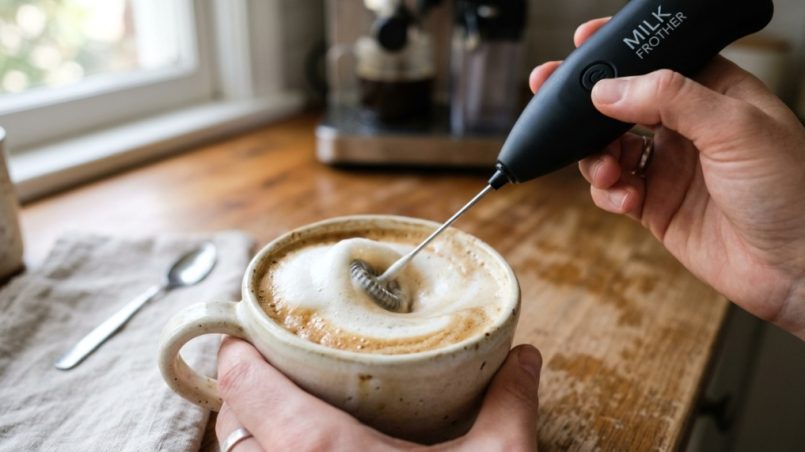
These pen-shaped devices cost between $8 and $25. They excel at frothing hot or cold milk in seconds, but they do not heat the milk. You must microwave or steam your milk separately. They are perfect for occasional use, travel, and small kitchens. Look for models with a stable whisk attachment that does not wobble at high speeds.
Automatic Electric Frothers
Ranging from $20 to $50, these countertop pitchers heat and froth milk simultaneously. Most include settings for hot froth, cold froth, and hot milk only. They are ideal for daily use because they eliminate guesswork. The downside is cleaning; the whisk attachment and lid require thorough washing to avoid milk residue buildup.
Manual French-press frothers
A surprisingly effective and dirt-cheap option. Heat your milk, then pump the plunger of a French press 30–40 times. This method produces dense foam but requires arm effort. It costs nothing extra if you already own a French press. It works best with whole milk and is not recommended for plant-based varieties.
How Can You Evaluate Cheap Milk Frothers Like a Pro?
Evaluating a cheap frother requires looking beyond the price tag. You must assess build quality, noise level, ease of cleaning, and how well it handles your preferred milk type. Professional baristas often test frothers with a simple “pour test” to evaluate foam stability.
The Pour Test Technique
After frothing, pour the milk immediately into a clear glass. Good foam holds its shape for at least 30 seconds without separating into bubbles and liquid. Cheap frothers often create large, unstable bubbles that collapse within 10 seconds. Watch demonstration videos before buying.
Noise Level Considerations
Automatic frothers can be surprisingly loud. Check decibel ratings in customer reviews. If you plan to froth milk while others are sleeping, a manual frother or a quiet handheld model (under 65 dB) is better. California apartment dwellers should especially consider noise levels.
Ease of Cleaning and Maintenance
A frother that takes more than two minutes to clean is a daily hassle. Removable whisk attachments, non-stick interior coatings, and dishwasher-safe parts are worth paying a few extra dollars for. Silicone seals can trap milk and develop odors; stainless steel interiors resist this problem.
If you love crafting cafe-style drinks at home, you might also enjoy exploring how Japanese flavor trends taking over restaurant menus in Miami, FL, are redefining modern culinary pairings!
What Features Should You Ignore to Save Money?
Manufacturers love adding features that inflate prices but add minimal value. Knowing what to skip helps you find a truly cheap milk frother California residents actually recommend. Five common overhyped features include digital displays, pre-programmed recipes, auto-shutoff timers, multiple color options, and brand-name pods or capsules.
Digital Displays and Smart Features
A blue LED screen showing temperature might look cool, but it adds $10–$15 to the cost. Most people froth milk by feel or volume, not by exact temperature. Simple tactile buttons or a single dial works fine for under $30 frothers.
Pre-Programmed Recipes
Having buttons labeled “latte,” “cappuccino,” and “flat white” sounds convenient, but these settings often just adjust frothing time slightly. You can replicate the same result by manually controlling the frothing duration. Skip these to save money and reduce complexity.
Bundled Accessories
Free recipe books, extra whisks, or travel bags often justify a higher price. However, the included accessories are usually low quality. You are better off buying a bare-bones frother and using the savings to purchase a high-quality spare whisk later if needed.
Can You Trust Cheap Milk Frothers for Daily Use?
Yes, many cheap milk frothers survive daily use for 12 to 18 months when properly maintained. The key is to choose a model with excellent customer reviews specifically mentioning longevity. Avoid frothers with thin plastic gears or poorly sealed battery compartments in handheld versions.
Common Failure Points in Budget Frothers
Motor burnout (especially in frothers used for more than two consecutive minutes), battery corrosion in handheld models, and whisk detachment due to weak magnetic couplings. Reading the “worst reviews” on Amazon often reveals these failure patterns. Use that information to select a durable unit.
Warranty and Return Policies
Cheap frothers usually come with a 30-day to 1-year warranty. Check the seller’s return policy before purchasing. Amazon, Target, and Walmart offer easy returns, while smaller online stores may charge restocking fees. California’s consumer protection laws give you extra leverage if the product arrives defective.
For a curated selection of reliable, budget-friendly options that have passed real-world testing, explore this list of the best cheap milk frother California residents recommend for daily use. This resource compares top-rated models under $40 with verified performance data.
How Do You Maintain a Cheap Milk Frother for Maximum Lifespan?
Proper maintenance can double the life of a cheap milk frother. Simple habits like immediate cleaning, avoiding overfilling, and descaling every few months prevent the most common damage. California’s hard water areas (like Los Angeles and the Central Valley) require extra attention to mineral buildup.
Daily Cleaning Routine
Rinse the whisk and inner pitcher immediately after use with warm water. Use a soft sponge and mild soap—never abrasive scrubbers. For handheld frothers, run the whisk in a cup of hot soapy water for 10 seconds to dislodge milk residue. Dry all parts thoroughly before storing.
Weekly Deep Cleaning
Once a week, soak the whisk and removable parts in a mixture of white vinegar and water (1:3 ratio) for 20 minutes. This removes invisible milk fats and prevents odors. Rinse thoroughly. For automatic frothers with non-removable whisks, fill the pitcher with the vinegar solution and run it on the cold setting without milk.
Descaling for Hard Water
If your frother builds up white mineral deposits on the heating plate, descale every 2–3 months using a commercial descaling solution or citric acid. Do not use vinegar on the heating element’s interior, as it can corrode seals. Follow the manufacturer’s descaling instructions precisely.
Which Cheap Milk Frother Brands Deliver Consistency?
Not all budget brands are created equal. Some consistently produce reliable frothers under $40, while others flood the market with disposable units. Based on thousands of user reviews and independent testing, four brands stand out for their balance of price and performance.
Secura
Known for automatic frothers with stainless steel interiors and quiet motors. Their models often include two whisk attachments (one for dense foam and one for light froth). Prices range from $25 to $45. They handle plant-based milks relatively well and have a low failure rate.
Zulay
Zulay dominates the handheld frother market with ergonomic designs and powerful motors. Their frothers cost between $10 and $20 and feature a stable whisk that does not bend. They also offer a lifetime warranty, which is extraordinary for a cheap frother. Excellent for travel and occasional use.
PowerLix
PowerLix produces both handheld and automatic frothers. Their handheld models have a reputation for being quieter than competitors. The automatic versions include a cold froth setting, making them popular among iced coffee lovers. Prices typically stay under $35.
When Is the Best Time to Buy a Cheap Milk Frother in CA?
Timing your purchase can save you an additional 15–30% off already low prices. Major sales events and seasonal trends in California create ideal buying windows. Knowing when to hold off and when to pounce helps you get the best value.
Prime Day and Black Friday Deals
Amazon Prime Day (usually in July) and Black Friday (in November) slash prices on kitchen gadgets, including milk frothers. Automatic frothers often drop to $18–$25 during these events. Set price alerts using CamelCamelCamel or Keepa to catch the lowest price.
End-of-Summer Sales
As summer ends, stores discount cold frothers and iced coffee accessories. This is a great time to buy a frother specifically for iced drinks. Many California retailers, including Target and Best Buy, offer clearance deals in September.
New Year Resolutions Season
January sees a surge in coffee equipment sales as people commit to home brewing. Both online and brick-and-mortar stores offer bundle deals (frother with coffee beans or mugs). This is also when older models get discontinued and heavily discounted.
Frequently Asked Questions
Can I use a cheap milk frother with almond milk?
Yes, but check for a cold froth setting or a non-dairy mode. Almond milk is thin and requires gentle whisking. Many cheap automatic frothers under $30 fail with almond milk, so read reviews specifically mentioning plant-based milk performance.
How long does a cheap milk frother typically last?
With proper care, a budget frother usually lasts 12 to 18 months. Handheld models may need battery replacement after 6–8 months of daily use. Automatic frothers with stainless steel interiors often last longer than plastic-bodied units.
Is a handheld frother better than an automatic one?
It depends on your needs. Handheld frothers are cheaper, smaller, and easier to clean but require you to heat milk separately. Automatic frothers heat and froth simultaneously, making them more convenient for daily use but harder to clean.
Do cheap frothers work for latte art?
Some do, but most cheap frothers create bubble-rich foam rather than silky microfoam. Look for frothers with a fine-mesh whisk or a “microfoam” label. Handheld frothers with dual-ring whisks produce the smoothest texture for latte art.
Can I froth cold milk with a cheap frother?
Yes, many automatic frothers include a cold froth setting. Handheld frothers also work on cold milk, but the foam will be airier and less stable than hot foam. For thick cold foam, use whole milk and froth for at least 30 seconds.
How do I clean a frother that smells like sour milk?
Disassemble all parts and soak them in a solution of equal parts water and white vinegar for 30 minutes. Scrub with a bottle brush, rinse thoroughly, and dry completely. Replace any silicone seals if the smell persists.
What wattage is best for a cheap milk frother?
For handheld frothers, 300–400 watts is sufficient. For automatic frothers, 400–600 watts. Higher wattage does not always mean better foam; whisk design matters more. Focus on wattage only as a secondary factor.