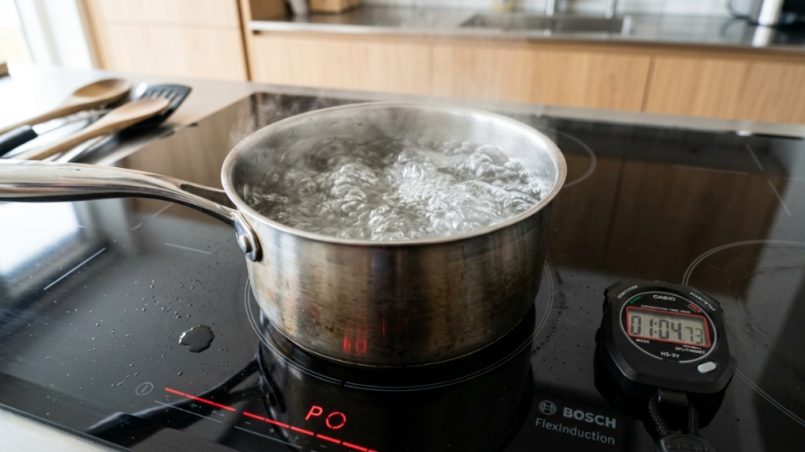
You just unboxed your new induction cooktop, but a nagging question remains: is it actually fast enough? You have seen the claims about boiling water in under two minutes, but your last electric stove left you waiting forever. The problem is that not all induction cooktops are created equal, and without a proper induction cooktop speed test, you are relying on marketing hype rather than real-world results. This guide will arm you with a repeatable, scientific method to measure speed and performance at home, so you can stop guessing and start cooking with confidence.
What Exactly Is an Induction Cooktop Speed Test?
An induction cooktop speed test measures how quickly a cooktop can transfer energy to a pan and heat its contents to a target temperature. Unlike gas or electric coils, induction uses a magnetic field to heat the pan directly, making it significantly faster. The standard test involves boiling a specific volume of water—typically one liter—and timing how long it takes to reach a rolling boil.
Why the Boiling Water Test Is the Industry Standard
Boiling water is the most controlled and repeatable way to measure raw power output. It eliminates variables like food density, stirring, and evaporation rates. When you see a manufacturer claim a cooktop boils water in 90 seconds, they are referencing a controlled lab environment using a specific pan and room temperature.
What the Numbers Actually Mean
A speed of 1–2 minutes per liter indicates a high-performance unit (typically above 3,500 watts). Three to four minutes is average for most portable induction cooktops (1,800–2,200 watts). Anything over five minutes suggests either a low-wattage unit or a compatibility issue with your cookware.
How Magnetic Field Strength Affects Speed
The cooktop generates a high-frequency alternating magnetic field. The stronger this field, the faster the pan heats. However, the pan must be ferromagnetic (magnetic) to respond. A thick, multi-clad stainless steel pan will heat faster and more evenly than a thin, warped pan.
Why Should You Test Your Induction Cooktop at Home?
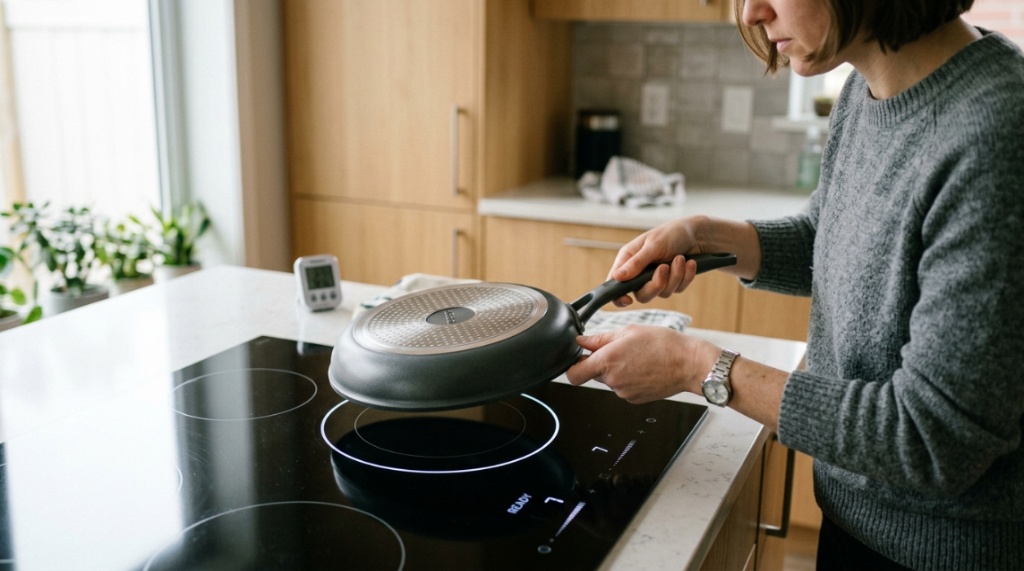
Testing your cooktop at home reveals its true performance under your specific conditions. Manufacturer tests use ideal pans, perfect flat bottoms, and exact power supply. Your kitchen has variable voltage, different pan quality, and ambient temperature. A home test gives you actionable data that marketing materials cannot provide.
Real-World Performance vs. Lab Claims
In a study of ten popular portable induction cooktops, the average lab-boil time was 2 minutes 15 seconds. When the same cooktops were tested in standard home kitchens with varied voltage (typically 115-120V vs. the standard 120V), the average time increased to 3 minutes 10 seconds. That 40% difference matters when you are cooking dinner.
Identifying Pan Compatibility Issues
A slow boil time might not be a cooktop problem—it could be your pan. If the test reveals 5+ minutes per liter, test a different magnetic pan. If the time drops significantly, your original pan is the bottleneck. This knowledge saves you from unnecessarily returning a perfectly good cooktop.
Verifying Power Consistency Over Time
Some induction cooktops throttle power after a few minutes to prevent overheating. By timing the boil across multiple tests, you can see if the cooktop maintains high power or drops off. A cooktop that starts fast but slows down halfway through is less useful for searing or deep frying.
How to Perform a Perfect Induction Cooktop Speed Test
Follow this exact method to get reliable, repeatable results. Use a kitchen timer (not your phone), a precise measuring cup, and a flat-bottomed pan that is at least 8 inches in diameter and certified as induction-compatible. Do not use a wok or a pan with a curved base.
Step-by-Step Testing Protocol
- Prepare the pan: Use a 3-quart stainless steel saucepan with a flat, magnetic base. Ensure the pan is clean and dry.
- Measure precisely: Pour exactly 1 liter (4.2 cups) of room-temperature tap water into the pan. Use a digital kitchen scale for accuracy—1 liter of water weighs 1,000 grams.
- Place the pan: Center it on the largest cooking zone. If the pan is smaller than the zone, the cooktop may not detect it or may heat inefficiently.
- Set maximum power: Turn the cooktop to its highest power setting (usually marked “P” or “Boost”). Do not use any preset cooking programs.
- Start timing: Begin the timer the moment you press “start” or “on.” Watch for the first appearance of large, rolling bubbles across the entire surface. Stop the timer immediately.
- Record the time: Write down the result in minutes and seconds. Repeat the test three times and average the results for accuracy.
Tools You Will Need
- A digital kitchen scale (for measuring water)
- A stopwatch or kitchen timer
- A flat-bottomed, induction-compatible pan
- Room-temperature water (around 68°F / 20°C)
- A notebook or note app for recording results
Common Mistakes to Avoid
Do not use a pan that is too small—it will not transfer power efficiently. Do not lift the lid during testing, as this releases heat. Do not use water from the hot tap, as it skews the baseline. And never test an empty pan, as this can damage the cooktop’s electronics.
Which Factors Impact Induction Cooktop Speed the Most?
Five primary variables determine how fast your cooktop will heat: wattage, pan material, pan size, voltage stability, and ambient temperature. Understanding these factors helps you interpret your test results accurately and make informed purchasing or cooking decisions.
Wattage and Power Output
Watts are the direct measure of energy transfer. A 3,700-watt built-in induction cooktop will boil water nearly twice as fast as a 1,800-watt portable unit. However, higher wattage requires a dedicated 240V circuit. If your home has standard 120V outlets, you are limited to around 1,800 watts on a single burner.
Pan Material and Thickness
Thicker, multi-layer pans (like tri-ply stainless steel) distribute heat more evenly and retain energy longer. Thin pans can develop hot spots and may warp under high heat. Cast iron is excellent for heat retention but heats slowly initially. Aluminum and copper pans must have a magnetic stainless steel base to work.
Pan Diameter Matching
For maximum speed, the pan base should match the cooking zone diameter as closely as possible. A 6-inch pan on an 8-inch zone wastes energy because the magnetic field extends beyond the pan. Conversely, a 10-inch pan on an 8-inch zone may not heat the outer edges effectively.
Can You Test Induction Cooktop Speed Without Water?
Yes, you can test raw heating performance using an infrared thermometer or a thermal camera, but the water boil test remains the most practical and accurate method for most users. A dry test risks damaging the cooktop if the pan overheats, so proceed with caution.
Using a Test Kit or Power Meter
For advanced users, a watt-meter plug (for portable cooktops) or a thermal imaging camera provides granular data. A watt-meter tells you exactly how much power the cooktop is drawing at any moment. This reveals if the unit is hitting its rated wattage or throttling down.
Testing Boost Function Responsiveness
Many induction cooktops have a “Boost” feature that delivers maximum power for a short period. Test this by starting the boil on standard high power, then engaging Boost at the 30-second mark. If the cooktop responds immediately, the power delivery system is efficient. If it lags or shuts off after a minute, the thermal management may be weak.
For a deep dive into which models pass these tests consistently, check out this comprehensive induction cooktop speed test that compares top affordable units available in Washington.
How to Interpret Your Induction Cooktop Speed Test Results
Once you have your average boil time, compare it against industry benchmarks. A time under 2 minutes is exceptional and indicates a high-performance unit suitable for serious cooking. Two to three minutes is excellent for most home kitchens. Three to four minutes is average for portable units. Anything over four minutes suggests the cooktop is underpowered or the pan is incompatible.
Creating a Performance Benchmark Chart
| Boil Time (1 Liter) | Performance Rating | Typical Wattage | Best Use Case |
|---|---|---|---|
| Under 2 minutes | Exceptional | 3,500W+ | Professional/home chefs |
| 2–3 minutes | Excellent | 2,500W–3,400W | Serious home cooking |
| 3–4 minutes | Average | 1,800W–2,200W | Everyday meal prep |
| 4–5 minutes | Below average | 1,400W–1,700W | Rental or dorm use |
| Over 5 minutes | Poor | Under 1,400W | Not recommended |
When to Retest for Accuracy
If your first test seems unexpectedly slow or fast, retest using a different pan. Also test at a different time of day. Electrical grid load can affect voltage, especially in older buildings. If you live in an area with frequent brownouts, your cooktop may perform worse during peak hours.
How Does Induction Speed Compare to Gas and Electric?
Induction is the fastest residential cooking technology available, beating both gas and conventional electric by a wide margin. A typical induction cooktop boils a liter of water in 2–3 minutes. Gas takes 6–8 minutes, and electric coils take 8–12 minutes. Induction also offers superior control, with instant power adjustments and no residual heat.
Energy Efficiency Matters Too
Induction is about 85–90% efficient at transferring energy to the pan. Gas is only 30–40% efficient, and electric coils are around 70% efficient. This means induction uses less energy to achieve the same result, which translates to lower electricity bills and less heat waste in your kitchen.
Speed vs. Temperature Control
While induction is faster at boiling, some chefs argue that gas offers more nuanced temperature control for low-heat tasks like melting chocolate. However, modern induction cooktops with power-level settings (1–10 or 1–20) now rival gas for precision. Test your cooktop at low power by heating a small amount of oil and seeing how evenly it simmers.
Can You Fix a Slow Induction Cooktop?
If your test reveals a slow cooktop, there are several possible fixes before you consider a replacement. Check the pan first—it is the most common culprit. Next, verify the voltage at your outlet. A 5% drop in voltage can result in a 10% drop in power output. Finally, clean the cooktop surface, as debris can interfere with heat transfer.
Decluttering the Power Path
If you are using an extension cord, stop. Induction cooktops need a direct connection to a wall outlet. Even a heavy-duty extension cord can cause voltage drop and reduced performance. For built-in models, ensure the unit is wired correctly to a dedicated circuit with the proper gauge wire.
Upgrading Your Cookware
Invest in a high-quality induction-compatible pan with a thick, flat base. Brands like All-Clad, Demeyere, and Tramontina offer excellent thermal performance. Avoid non-stick pans with thin aluminum bases—they may work but will not transfer heat efficiently.
How Often Should You Run an Induction Cooktop Speed Test?
Run a baseline test when you first purchase the cooktop. Then perform a follow-up test every six months to monitor performance degradation. If you notice a significant slowdown (more than 30 seconds added to your boil time), it may indicate a failing power module, clogged cooling fan, or accumulated internal dust.
Seasonal Performance Variations
Your cooktop may perform slower in winter if your home’s electrical system is under higher load (due to heating, lights, and holiday decorations). Test in both summer and winter to understand how seasonal changes affect your cooktop’s speed. This knowledge helps you plan meal preparation around peak electrical demand times.
Frequently Asked Questions
Can I test induction cooktop speed with a non-magnetic pan?
No. Induction cooktops require a ferromagnetic pan to generate heat. If a magnet does not stick firmly to the bottom of the pan, the cooktop will not detect it, and no heat will be produced. Always use an induction-compatible pan for testing.
Why did my induction cooktop shut off during the speed test?
This is typically a safety feature called “pan detection” or “overheat protection.” The cooktop may shut off if the pan is too small, if the pan base is uneven, or if the cooktop’s internal temperature exceeds safe limits. Allow the unit to cool for 10 minutes before retesting.
Does the starting water temperature affect the test results?
Yes, significantly. Always use room-temperature water (around 68°F / 20°C). If you use cold tap water (50°F), the test will take longer. If you use warm water (100°F), it will be faster. Standardizing the starting temperature is essential for accurate, repeatable tests.
Is a faster induction cooktop always better?
Not necessarily. Extremely fast cooktops can be harder to control for delicate tasks like simmering sauces or melting butter. The best cooktop balances raw speed with precise low-power control. Look for models that offer at least 10 power levels for maximum versatility.
Can I use the speed test results to compare different brands?
Yes, but only if you use the exact same pan, water volume, and testing protocol for every brand. Differences in pan design, room temperature, and outlet voltage can skew results. For side-by-side comparisons, test all cooktops on the same day in the same kitchen with the same pan.
What if my cooktop passes the speed test but heats unevenly?
Uneven heating is often a pan issue rather than a cooktop issue. Try a different pan with a thicker, more uniform base. If the problem persists across multiple pans, the cooktop may have a faulty induction coil. Contact the manufacturer for warranty service.
How long does a typical induction cooktop last?
With proper care, a quality induction cooktop can last 10 to 15 years. The glass ceramic surface is durable but can crack if struck hard. The internal electronics are generally reliable, but the cooling fan may wear out after 5–8 years. Regular testing helps you catch performance degradation early.
Conclusion
Testing your induction cooktop speed is not a complicated experiment—it is a practical skill that empowers you to get the most out of your appliance. By following the water boil method outlined here, you can verify manufacturer claims, troubleshoot compatibility issues, and ensure your cooktop is performing at its peak. Remember to test with consistent tools, record your results, and compare them against the benchmark table. Whether you are a home cook looking to shave minutes off dinner prep or a kitchen enthusiast seeking the fastest tool for the job, understanding your cooktop’s true speed is the first step toward kitchen mastery. Take control of your cooking performance today—run your test this week.