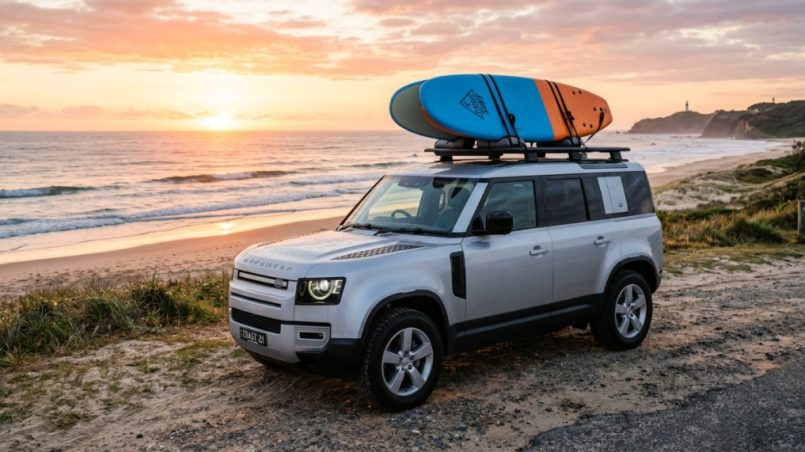
You’ve got the board, the wetsuit, and the wax. But if you drive an SUV, you’ve probably already realized that cramming a 9-foot longboard inside isn’t just awkward—it’s dangerous. It blocks your view, messes up your interior, and puts your board at risk of snapping on every sharp turn. The real solution is getting a roof rack that actually fits your vehicle and your surfing habits. But with so many options out there, picking the right one can feel overwhelming. This guide breaks down exactly what to look for in a surfboard rack for SUV, how to avoid common mistakes, and how to match a rack to your specific driving and surfing needs.
What Type of Surfboard Rack Works Best on an SUV?
Unlike sedans, SUVs have taller rooflines and often come with factory-installed side rails or fixed points. This changes which racks are viable. Generally, you have three main categories to choose from: soft racks, cradle racks, and stacker racks. Each has a specific purpose, and the right choice depends on how often you surf, how many boards you carry, and how far you drive.
Soft Racks: The Budget-Friendly Option
Soft racks use foam blocks and straps that hook inside your vehicle’s door frames. They are inexpensive, easy to install, and don’t require any permanent modifications. However, they are not ideal for long highway trips. Because they rely on door-frame tension, they can shift in strong crosswinds. They also place pressure on your car’s paint and weather stripping. If you only surf a few times a year and drive under 30 minutes to your local break, a soft rack is a fine starting point. For anything more serious, you’ll want a more permanent solution.
Cradle Racks: The Best Balance of Safety and Convenience
Cradle racks attach directly to your SUV’s factory crossbars or roof rails. They feature padded arms that hold your board on its edge, which is the safest position for your board’s fins and rails. Cradle racks are the most popular choice for SUVs because they offer a secure fit without requiring you to modify your vehicle. They typically lock to the crossbars, providing theft protection. They also allow you to open your rear hatch without obstruction, which is a major advantage over tailgate pads.
Stacker Racks: For Multi-Board Surf Trips
If you regularly travel with friends or family, a stacker rack is worth considering. These racks hold boards vertically, one on top of another, using padded arms and straps. A good stacker can carry up to four boards securely. The downside is that loading and unloading takes more time, and the vertical position can increase wind resistance, which slightly impacts fuel economy. Stackers are best for dedicated surf trips where you’re carrying multiple boards for multiple people.
Key Factors to Consider Before Buying
Before you hit “add to cart,” you need to check a few specific details about your SUV. Not all racks fit all vehicles, even if they look similar. Ignoring these factors is the most common reason people end up with a rack that wobbles, whistles, or simply doesn’t fit.
Check Your SUV’s Roof Setup
First, look at your roof. Does your SUV have factory side rails? Do you have crossbars already installed? Or is your roof completely bare? This determines what mounting hardware you need. If you have side rails but no crossbars, you’ll need to purchase crossbars separately before you can use a cradle or stacker rack. If you have a bare roof, you’ll need a rack system that uses a clip-on mechanism that attaches to your door frames—similar to a soft rack but with a hard base. Always check your vehicle’s owner’s manual for the maximum roof load capacity. Most SUVs can handle between 100 and 165 pounds, but this includes the weight of the rack itself.
Board Length and Weight Capacity
Not all racks are created equal. Some are designed for shortboards (under 7 feet), while others can handle longboards up to 12 feet. Check the rack’s maximum weight rating as well. A single longboard can weigh 20 to 30 pounds, and a stacker with four boards can easily exceed 100 pounds. Make sure the rack you choose is rated for the total weight you plan to carry. Overloading a rack is not just a safety hazard—it can damage your SUV’s roof structure. To master your pop-ups and stability out on the waves after securing your gear, make sure to Use a Balance Board to Improve Surfing Skills during your off-season training sessions.
Locking Mechanisms and Security
Surfboards are expensive, and leaving them on your roof while you grab a coffee or use a public restroom is a risk. Look for racks that come with integrated locks. Some locks secure the rack to the crossbars, while others secure the board to the rack. Ideally, you want both. If a rack doesn’t have locks, you can often purchase universal locking cables separately, but integrated systems are more convenient and less likely to scratch your board.
How to Install a Surfboard Rack on Your SUV
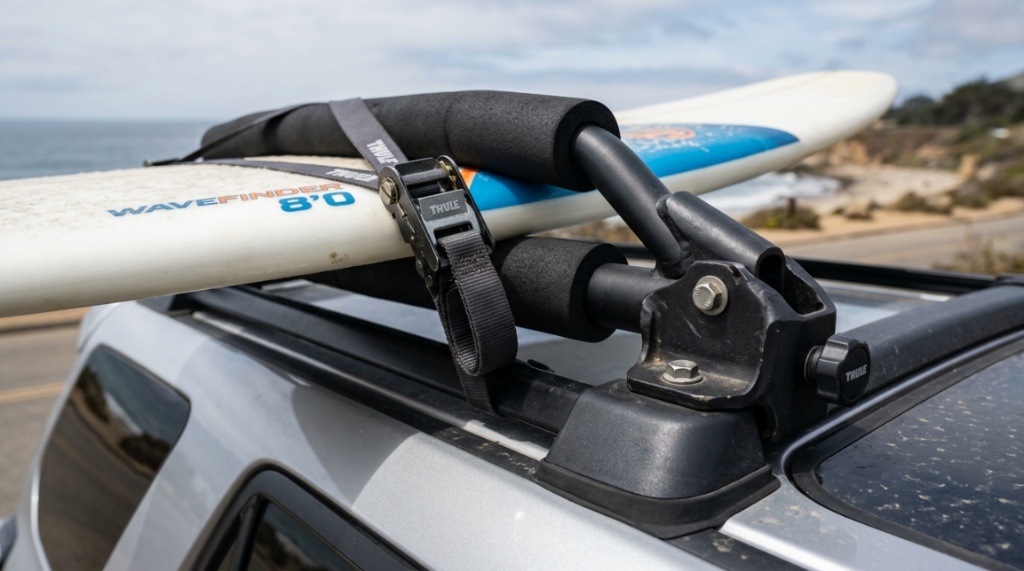
Installation varies by rack type, but the process is generally straightforward. For cradle and stacker racks, you’ll typically need a hex key or a wrench. Here’s a general step-by-step guide:
- Position the rack: Place the rack on your crossbars, spacing it evenly so the weight is distributed. For most SUVs, positioning the rack slightly forward of center helps with aerodynamics.
- Attach the mounting brackets: Most racks use a clamp or bolt system that wraps around the crossbar. Tighten these bolts evenly, alternating from side to side to ensure the rack sits level.
- Adjust the arms: For cradle racks, adjust the width of the arms to match the width of your board. The arms should support the board’s rails, not the stringer.
- Test the fit: Place your board on the rack and secure the straps. Give the board a firm shake to ensure there is no movement. If it wobbles, tighten the straps and re-check the mounting bolts.
- Check clearance: Ensure the board does not extend too far over the windshield or the rear of the vehicle. If it does, adjust the rack position.
If you’re using a soft rack, the installation is simpler but requires more care. Place the foam blocks on the roof, feed the straps through the door frames, and close the doors. Be careful not to pinch the straps in the door latch, as this can prevent the door from closing securely.
Common Mistakes to Avoid
Many surfers make the same errors when setting up their racks. Avoiding these will save you time, money, and potentially your board.
- Over-tightening straps: Crank down too hard on the straps, and you can dent your board’s rails or crack the fiberglass. The board should be snug, but not compressed.
- Ignoring wind noise: If you hear a loud whistle on the highway, it’s usually because the rack is not positioned correctly or the straps are flapping. Use the rubber strap keepers to secure loose ends.
- Forgetting about the fins: When using a cradle rack, always position the board with the fins facing upward or inward. Fins pointing down can get caught in the rack and snap off.
- Not using a bowline knot: The front and rear tie-down straps are essential for long drives. They prevent the board from sliding forward or backward during hard braking. Always use a bowline knot or a quick-release knot, never a standard knot that jams.
Soft Rack vs. Hard Rack: Which Is Right for You?
This is the most common decision point for SUV owners. To make it easier, here’s a quick comparison of the two main styles:
| Feature | Soft Rack | Hard Rack (Cradle/Stacker) |
|---|---|---|
| Price | Low ($50–$150) | Moderate to High ($200–$600) |
| Installation Time | 5 minutes | 30–60 minutes |
| Security | Low (no locking mechanism) | High (integrated locks available) |
| Highway Stability | Moderate (can shift in wind) | Excellent (rigid mount) |
| Board Protection | Good (foam padding) | Excellent (padded cradles) |
| Best For | Occasional local trips | Daily driving, long trips, multiple boards |
If you are a weekend warrior who only hits the beach a few times a month, a soft rack is a practical and affordable choice. However, if you surf multiple times a week or plan to drive long distances, a hard rack is a worthwhile investment. For those living in California—where surfing is a year-round lifestyle—a durable hard rack is often the better long-term solution. You can find a detailed breakdown of top-rated options for that region in this guide to the best surfboard rack for SUV setups, which covers models specifically suited for the highways and coastal routes out there.
Can You Use a Surfboard Rack with Factory Crossbars?
Yes, and in most cases, you should. Factory crossbars are designed to handle the weight and wind resistance of roof-mounted cargo. The key is to ensure that the rack you buy is compatible with the shape of your factory bars. Some factory bars are aerodynamic and have an oval or wing-shaped profile. Universal racks usually come with adapters or rubber shims to fit these shapes. If your SUV has flush rails (where the rails sit flat against the roof), you will need to purchase crossbars separately before you can mount a surfboard rack. Do not attempt to strap a board directly to flush rails—it will not be secure.
Frequently Asked Questions
Will a surfboard rack damage my SUV’s roof?
If installed correctly, a hard rack should not damage your roof. However, soft racks can cause paint rubbing if dirt gets trapped between the foam and the roof. To prevent this, always wash your roof before installing a soft rack. For hard racks, ensure the mounting clamps are not over-tightened, as this can dent the crossbars.
How fast can I drive with a surfboard on my roof?
Most rack manufacturers recommend staying below 70 mph with a board on the roof. At higher speeds, wind pressure can cause the board to vibrate, which puts stress on the straps and the rack mounts. If you are driving on the highway, periodically check the straps at rest stops to ensure they haven’t loosened.
Can I leave the rack on my SUV when not in use?
Yes, but you should remove the surfboard. Leaving the rack on is fine and will not damage your vehicle. However, it will create additional wind noise and slightly reduce fuel efficiency. If you don’t want the added drag, most cradle racks can be removed with a simple hex key in under ten minutes.
What is the best way to secure a longboard to an SUV rack?
For a longboard, use a cradle rack with wide padded arms. Position the board with the nose pointing forward. Use the rack’s straps to secure the board, then add a separate bowline knot at the front and rear of the vehicle. This prevents the board from sliding forward during hard braking.
Do I need a special rack for a foam surfboard?
Foam boards (like soft-tops) are thicker and more fragile than fiberglass boards. You should use a rack with wide, soft padding to avoid crushing the foam. Avoid over-tightening the straps, as this can leave permanent dents in the board’s surface.
Conclusion
Choosing the right surfboard rack for your SUV comes down to three things: how often you surf, how many boards you carry, and how far you drive. For occasional local trips, a soft rack is a budget-friendly option. For regular use, longer drives, or multiple boards, a hard cradle or stacker rack is the safer and more practical investment. Always check your SUV’s roof load rating, ensure the rack is compatible with your crossbars, and never skip the front and rear tie-downs. Take the time to install it correctly, and you’ll have a reliable setup that gets you—and your board—to the beach safely for years to come.