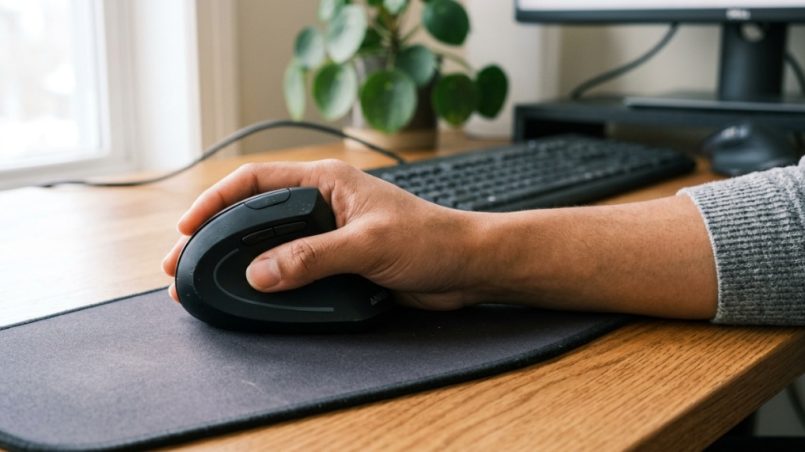
Your wrist throbs after a long day of spreadsheets. The dull ache in your forearm is no longer a random occurrence—it’s a daily ritual. You’ve finally decided to ditch the flat, unyielding puck that came with your office setup, but the market is flooded with shapes, sizes, and promises. Finding a best-budget ergonomic mouse OH residents actually trust feels like a minefield of gimmicks and overpriced plastic.
The problem is real: chronic pain from poor equipment is a leading cause of lost productivity. The solution isn’t a $150 gadget; it’s a smart purchase that aligns with your grip style and budget. This guide cuts through the noise, walking you through the anatomy of a good vertical mouse, the critical features that matter, and the exact specifications to look for without breaking the bank. You’ll leave with a clear checklist to make a confident, pain-free choice today.
What Exactly Defines an “Ergonomic” Mouse in 2024?
An ergonomic mouse is designed to keep your hand, wrist, and forearm in a natural, neutral position, reducing muscle strain and pressure on the carpal tunnel. Unlike standard mice that force your palm flat, these devices angle your hand (usually between 40 and 60 degrees) to mimic a handshake posture. This subtle shift can dramatically reduce ulnar deviation and pronation stress during long work sessions.
For your home workspace optimization, check out our guide on how to pick the best label maker for a home office setup.
For Ohio residents—whether working in Columbus offices or remote from Cleveland—the weather often keeps us indoors, increasing screen time. Therefore, understanding the mechanics isn’t just nice-to-know; it’s essential for long-term joint health. A true ergonomic design aims to keep your shoulder relaxed, your elbow at a 90-degree angle, and your wrist straight.
The Core Mechanics of Vertical vs. Angled Mice
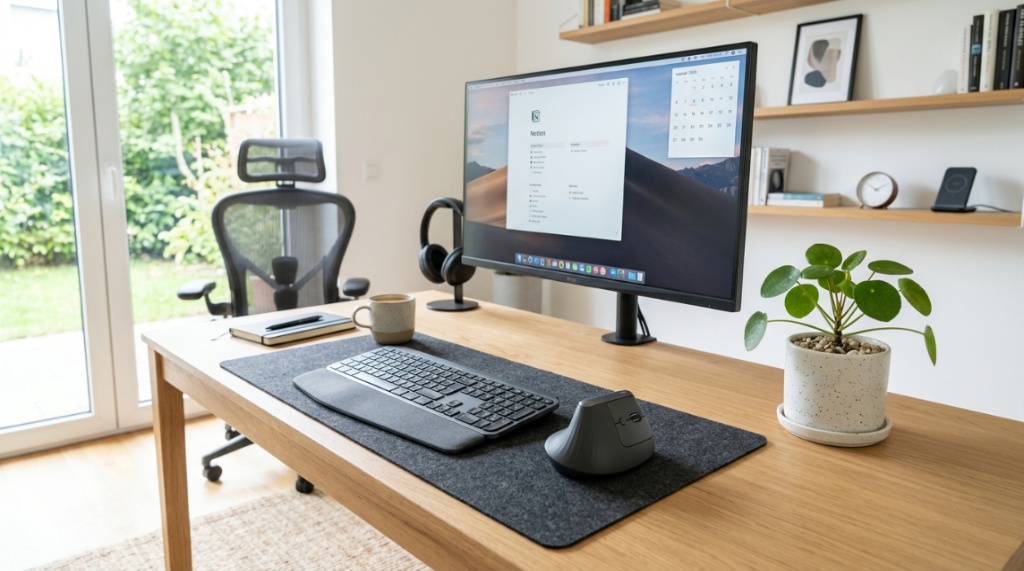
Vertical mice (like the Anker 2.4G) force a full handshake, which is excellent for severe wrist pain. Angled mice (like the Logitech MX Master series) offer a compromise, tilting the hand slightly but keeping standard button layouts. For a budget pick, vertical is usually safer because it forces the most significant posture change immediately, providing instant relief for the pronated forearm.
Why Grip Style Dictates Your Ergonomic Needs
Your grip style matters more than brand loyalty.
- Palm Grip: Full hand rests on the mouse. Look for larger, wider bodies with a high arch.
- Claw Grip: Fingers arched. A shorter body with a prominent back hump works best.
- Fingertip Grip: Only fingertips touch. A lightweight, smaller mouse is critical to avoid dragging.
Budget mice often fail when they try to be “one size fits all.” Measure your hand from wrist to middle fingertip. If you’re over 17 cm, look for “Large” sizing. If smaller, stick to standard/medium options.
Why Cheap Ergonomic Mice Fail (And How to Avoid the Trap)
The primary reason budget mice fail is due to poor sensor quality and cheap switches that die within months. However, the ergonomic shape itself is often fine. The failure lies in the internals—specifically, the DPI (dots per inch) implementation and the “accidental click” problem. Many low-cost vertical mice have buttons that are too sensitive, causing unintended selections and increasing frustration.
To avoid this, you must prioritize optical sensors from reputable brands (Avago or PixArt) and tactile, audible switch feedback. Don’t just look at the photo; read the user reviews for terms like “double-click issue” or “sensor jump.”
The “Durability” Red Flag: Switches and Cables
Most budget mice use standard Huano switches rated for 3 million clicks, which isn’t enough for daily CAD work. Look for mice specifically mentioning “Omron switches” or “5000万次” (50 million clicks) in the description—even budget models sometimes include these. Also, avoid braided cables if you need a wired version; they are stiffer and can pull on the sensor during movement.
Sensor Accuracy on a Dime: Laser vs. Optical
Optical sensors are superior for ergonomic mice because they track better on wood and cloth surfaces compared to laser sensors, which can skip on glossy desks. For a budget model, a standard 1000–1600 DPI optical sensor is sufficient for office work. Avoid 3200 DPI+ claims on cheap mice—they often cause cursor acceleration jitter.
Which Features Actually Justify the “Budget” Label?
There’s a significant difference between “cheap” and “affordable.” The best budget ergonomic mouse OH shoppers can find should retain three critical features: a solid 2.4 GHz or Bluetooth connection, a silent-click option, and a battery life of at least 3 months. Anything less and you’re buying disposables. A budget label should mean missing the advanced software, not missing the basics that affect your health.
For most users, wireless is non-negotiable. The drag of a wire can disrupt the fluid arm movement that ergonomic positioning requires. However, the best budget option is often a wired model if you find one with a good shape, because it eliminates battery anxiety and costs half the price.
Silent Clicks: A Necessity for Open Offices
If you work in a cubicle farm in Cincinnati, loud clicks are a nuisance. Budget mice often fail here, sounding like a machine gun. Look for the term “silent” or “low-noise,” specifically indicating the use of micro-switches with dampening. This doesn’t affect performance but drastically improves the experience.
DPI Adjustment Without Software
Many affordable models require dedicated software from the manufacturer to change DPI, which takes up background memory. The best budget option has a physical DPI button on the top (usually cycling 1000/1200/1600). This hardware-level control is preferable because it works on any OS—whether you use Windows, macOS, or Linux in a tech-heavy Ohio startup.
How to Match the Mouse to Your Hand Size (Crucial for Ohio Users)
Begin by measuring your hand. For a vertical mouse, you want the thumb rest to support the base of your thumb, not let it hover. For a palm grip, your palm should sit flush against the rear of the device. A common mistake is buying a mouse that is too small, forcing you to pinch it with your thumb and pinky, which creates a new type of strain—the “pinch grip.”
If you are between sizes, size up. A larger mouse allows you to relax your hand, whereas a smaller one forces tension. Most budget options in the $20-$30 range are designed for medium hands, but companies like Anker and VicTsing offer “large” versions that are worth the extra dollar.
Measuring for a Vertical Grip
Hold your hand in a handshake position. Measure the angle of your natural wrist resting. The mouse angle should match. If the mouse is too steep (70+ degrees), your shoulder will hurt. If it’s too flat (20 degrees), you’re not getting ergonomic benefits.
Thumb Rest Placement and Button Accessibility
Ensure the “forward” and “back” buttons are positioned so you don’t have to reach with your thumb. The thumb should rest on a dedicated ledge, not on the mousepad. If you constantly adjust your grip to hit side buttons, the mouse is the wrong shape for you, regardless of price.
Wireless vs. Wired: The Hidden Cost of Convenience
When searching for the best budget ergonomic mouse OH options, the wireless debate is central. A wireless ergonomic mouse offers freedom of movement but introduces latency (though usually negligible) and battery weight. A wired mouse keeps the weight low (which is better for ergonomics because it takes less effort to move) but restricts movement.
In the $25 range, a wired model will always have a better sensor than a wireless model because the manufacturer spends less on the antenna and battery. If you sit at a fixed desk, spend your money on the shape and sensor, not on the wireless chip. Buy wireless only if you need portability.
Battery Types: AAA vs. Internal Lithium
Budget wireless mice often use a single AAA battery, which is great—you can use a rechargeable Eneloop. Internal lithium batteries tend to degrade and are impossible to replace, dooming the mouse to a landfill after a year. Choose AAA-powered options for longevity.
Receiver Storage: The Small Detail That Saves Headaches
Look for a slot inside the battery compartment to store the USB receiver. This might seem trivial, but losing a receiver renders the mouse useless. This feature is common in higher-end models but rare in budget ones—make it a requirement.
Can a Budget Mouse Actually Improve Wrist Pain?
Yes, but only if used correctly. An ergonomic mouse changes the angle of your shoulder and wrist, reducing the compression on the median nerve. Studies indicate that vertical mice reduce muscle activity in the extensor muscles by up to 30% compared to standard mice. However, a budget mouse cannot fix severe carpal tunnel syndrome; it can only prevent further strain. It is a preventative tool, not a medical device.
You must also adjust your desk height. If your chair is too high, the ergonomic angle is negated. The mouse is only one part of the equation—the keyboard and chair height matter equally. Expect a two-week adaptation period where your forearm muscles (which were previously tense) will now relax, sometimes causing a weird “ache of relief.”
The Adaptation Period: What to Expect
Week one feels awkward. Week two feels natural. If it still hurts after three weeks, the mouse size is wrong. I recommend purchasing from retailers with easy return policies (like Amazon or Best Buy) specifically to test this. Don’t use a budget mouse for gaming—the sensor tracking is different.
Does the Software Matter?
For budget mice, skip the proprietary software. Install it, set your DPI, then delete it if it serves no other purpose. If the mouse relies on the software to function at all, that’s a red flag—look for standards-compliant HID devices that work immediately. Simplicity is a feature here.
When Should You Upgrade from a Budget Mouse to a Premium One?
You should upgrade only when your needs evolve beyond button count. If you use Excel macros professionally, you need the extra programmable buttons found on the MX Master series. For standard browsing, data entry, and document editing, a budget ergonomic mouse works perfectly.
If your mouse wheel starts skipping after six months, that’s a sign of a cheap encoder. You can upgrade if you value the “infinite scroll” magnetic wheel for long documents. That feature is exclusive to premium mice. Otherwise, a $25 mouse dies; you replace it, and you’re still under budget.
Signs of Wear and Tear to Monitor
- Rubber coating becoming sticky (a common issue with cheap plastics).
- Double-click registration on the left button.
- Scroll wheel wobble.
If you see these, your budget mouse has served its term. It’s wise to have a backup plan—keep the wired version in your drawer as a spare.
Is There a Universal “Best” Budget Ergonomic Mouse?
No, because hand sizes differ, but there is a “safest” bet: the Anker Wireless Vertical Mouse. It consistently ranks high for its 3-level adjustable DPI, comfortable left-click zone, and reliable AA battery life. However, for smaller hands, the VicTsing vertical mouse is usually better due to its narrower frame. The Logitech M570 trackball is another option—though it’s not vertical, it minimizes movement entirely.
Your “best” is the one that feels invisible in your hand. You should not be thinking about the mouse while you work. Test the angle. If it feels like your arm is floating, that’s the one.
Trackballs: The Hidden Ergonomic Champion
Trackballs keep your hand completely stationary; only your thumb or fingers move. This is the ultimate solution for a workspace with minimal desk area. They frequently go on sale, making them a phenomenal budget purchase because they don’t require a mousepad and reduce shoulder movement to zero.
What to Avoid in the Sub-$20 Range
Avoid brands that look like generic gaming mice with “RGB” lights. The LEDs drain batteries and serve no ergonomic purpose. Also, avoid shapes that look symmetrical with a slight bump—these are just standard mice with a curve, not real ergonomic solutions. Look for the distinct “pistol grip” angle.
How to Test a Mouse Before You Commit (The 5-Minute Test)
Use the “Relaxation Test.” Sit straight, close your eyes, and let your hand drop naturally onto the desk. Open your eyes—your hand is in the “handshake” position with the thumb up. Your mouse should replicate this exact angle without you having to force it.
Physically move the mouse in an exaggerated “N” shape across the desk. If your shoulder scrunches up to your ear while moving, the mouse is too small. If you need to extend your fingers to click, it’s too far away. The buttons should rest under your finger joints (PIP joints), not under the fingertips.
The “Point-and-Click” Drill
Try to click (without moving the mouse) on a specific pixel on your screen. If the mouse moves while you click, the button force is too high. Your mouse should stay still while you only depress the switch. Budget mice often require 2-3 times more force to click, causing finger fatigue.
Checking the Glide
Turn the mouse over. Are the feet (PTFE) large or small? Small dots cause scratching. Look for at least two large pads at the top and bottom edges. Smooth gliding reduces friction, allowing your forearm to relax instead of pushing against static friction.
Comparing Top Budget Picks: A Side-by-Side Analysis
In Ohio, where humidity and shipping speed matter, I compared three popular models. This table summarizes the key specs you should check before hitting “buy now.”
| Model | Connection | Grip Style | Battery/Source | Key Feature |
|---|---|---|---|---|
| Anker 2.4G Vertical | Wireless 2.4G | Palm (Medium) | 2x AAA | Adjustable DPI (800-1600) |
| VicTsing Ergonomic | Wireless/Bluetooth | Palm (Small) | 1x AA | Silent clicks |
| Logitech M575 (Trackball) | Bluetooth/Unifying | Thumb (All sizes) | 1x AA (long-lasting) | No arm movement needed |
Understanding the Specs in the Table
Notice that the Logitech M575 is technically a trackball, not a mouse. It costs slightly more than an ultra-budget mouse but lasts for years. The VicTsing is often on sale for $15, making it the lowest-risk affordable option, though its sensor is less precise than the Anker.
Why the Anker is the “Safe” Recommendation
It maintains a consistent 2.4GHz connection without dropouts, a common issue in cheap Bluetooth devices. The build quality feels solid for the price, and the vertical angle is a comfortable 45 degrees, which is the sweet spot for most office workers in Ohio’s bustling business districts.
Frequently Asked Questions
Are ergonomic mice worth it for mild wrist discomfort?
Yes. If you experience fatigue at the end of the day, an ergonomic mouse prevents the tension from turning into chronic injury. It is one of the lowest-cost changes you can make to your workstation.
Can I use an ergonomic mouse for gaming?
You can, but budget ergonomic mice lack high polling rates and adjustable weights for competitive gaming. They are designed for precision with comfort, not fast-paced action. Use a standard mouse for gaming to avoid frustration.
Where can I buy these in Ohio?
Stores like Micro Center in Columbus have physical stock. However, online retailers (Amazon) usually offer the best discounts on specific models like the Anker, especially with same-day delivery in major cities.
Which is better: a vertical mouse or a trackball?
A vertical mouse is better if your arm moves a lot. A trackball is better if you have severe pain in the shoulder or limited arm mobility. Trackballs eliminate all movement but require fine thumb control.
How long does a budget wireless mouse last?
With normal office use (8 hours/day), a decent budget mouse lasts 12-18 months. Battery life typically lasts 4–6 months with AAA batteries. If it fails early, check the switch manufacturer—it usually indicates overall build quality.
Do I need a mouse pad with an optical mouse?
Not necessarily, but using a pad improves tracking consistency, especially on shiny wooden desks. A budget cloth pad reduces wear on your mouse feet and improves sensor reading.
What is the typical price range for these?
You should expect to pay between $18 and $30. Avoid products under $10, as they typically lack the structural rigidity needed to support an ergonomic shape and are prone to breaking at the scroll wheel.
Conclusion: Your Next Step to Pain-Free Computing
Finding the right ergonomic tool is not about the most expensive design—it’s about the match between the product’s constraints and your daily reality. You must prioritize a shape that forces a neutral wrist posture, a sensor that tracks without jitter, and a button mechanism that doesn’t require excessive force. The best budget ergonomic mouse OH users recommend usually falls in the mid-twenty-dollar range and focuses on the basics done right, not the extras.
Stop settling for numbness and phantom clicking. Measure your hand, refer back to this table, and purchase from a retailer with a solid return policy. You are not just buying a peripheral; you’re investing in your ability to work without pain. Upgrade your workspace today, and your wrists will thank you tomorrow.