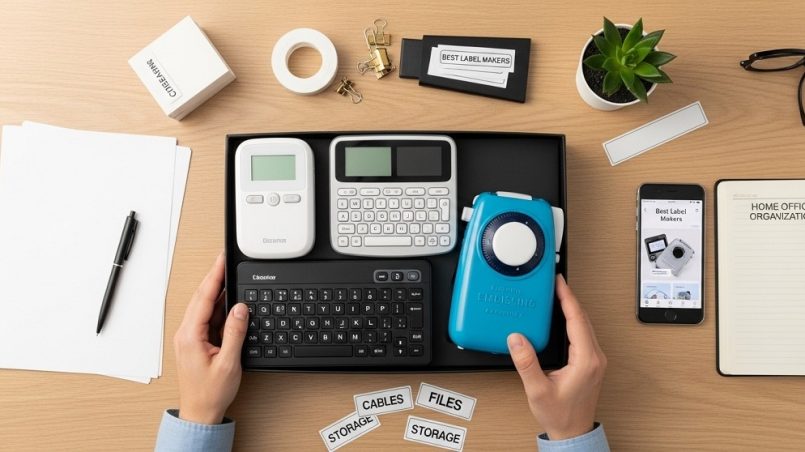
The best compact label maker for desk use is small, wireless, easy to load, and compatible with multiple label sizes. It should print clear text, support common fonts, and fit comfortably in a home office without taking up valuable workspace.
Your desk is where productivity happens. But clutter slows everything down. Papers pile up. Cables tangle. Storage boxes look identical. You waste minutes every day searching for things that should take seconds to find.
This is where a compact label maker for desk organization changes the game.
According to a 2023 National Association of Productivity and Organizing Professionals (NAPO) survey, over 82% of remote workers report increased stress due to disorganized workspaces. A simple labeling system reduces visual clutter and decision fatigue. It makes your workspace functional, not chaotic.
In this guide, you will learn exactly how to choose the right label maker for a home office setup—based on features, size, print quality, connectivity, cost, and long-term value.
Why Do You Need a Compact Label Maker for Desk Organization?
Short answer: A compact label maker improves efficiency, reduces clutter, and supports systematic organization in small home office spaces.
Problem: Home offices are often small. Many people work from shared spaces, bedrooms, or corner desks. Storage is limited.
Agitation: Without a labeling system, drawers become messy. Cables mix up. Files get misplaced. You spend unnecessary time searching.
Solution: A compact desktop label printer helps categorize and systemize everything. You label file folders, charging cables, storage bins, shelves, and even digital backups stored in physical drives.
Case Study Example:
A 2022 workplace productivity case study from a small remote marketing agency found that implementing labeled storage systems reduced average document retrieval time by 28%. The only change? Adding a simple labeling system across desks and storage cabinets.
That’s measurable impact from a low-cost tool.
- Improves file management
- Supports cable organization
- Enhances inventory tracking
- Reduces daily friction
- Maintains a clean desk aesthetic
If you want efficiency, a label maker is not optional. It is foundational.
What Features Should You Look for in a Compact Label Maker for Desk Setup?
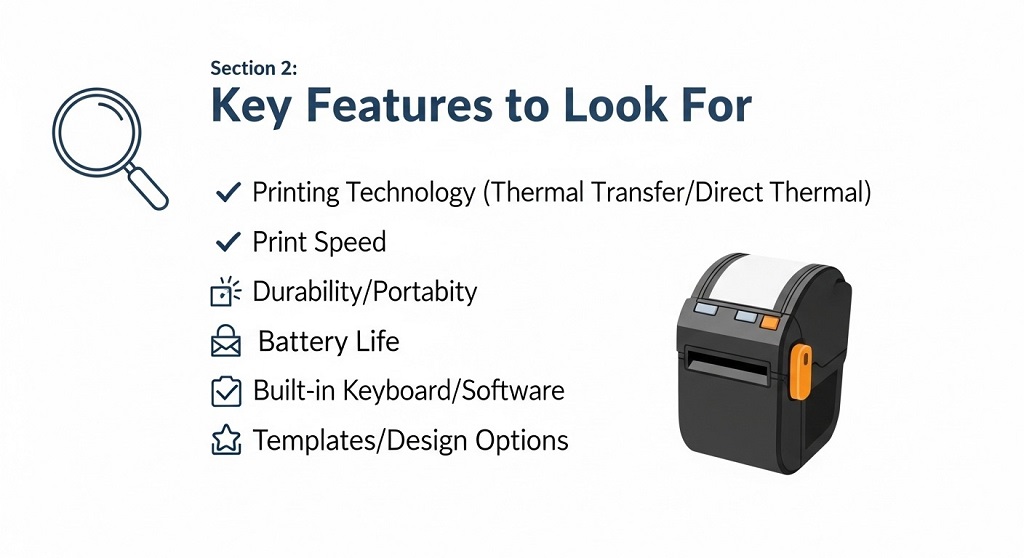
Short answer: Focus on size, print resolution, tape compatibility, connectivity, battery type, and durability.
1. Size and Portability
A compact label maker should fit in a desk drawer or sit neatly beside your monitor. Look for dimensions under 7 inches in length for true portability.
2. Print Quality and Resolution
Most modern thermal label printers offer 180–300 DPI. For home office use, 203 DPI is usually sufficient. Higher DPI gives sharper small fonts, ideal for file tabs.
3. Tape Width Options
Choose a device that supports multiple tape widths (6mm, 9mm, 12mm). Flexibility allows labeling drawers, binders, storage boxes, and shipping envelopes.
4. Connectivity
There are two main types:
- Standalone keyboard-based label makers
- Bluetooth label makers connected to smartphone apps
Bluetooth models allow more font styles, icons, and layout options.
5. Power Source
- AA battery powered
- Rechargeable lithium-ion battery
- USB-powered models
Rechargeable options reduce long-term cost and are more eco-friendly.
6. Durability and Tape Type
Check if tapes are:
- Water-resistant
- Fade-resistant
- Oil-resistant
- Removable without residue
Home offices may include kitchens or shared spaces. Durability matters.
Should You Choose a Bluetooth Label Maker or a Standalone Model?
Short answer: Choose Bluetooth for design flexibility. Choose standalone for simplicity.
| Feature | Bluetooth Model | Standalone Model |
|---|---|---|
| Font Variety | High | Limited |
| Ease of Use | App-based | Built-in keyboard |
| Portability | High | Moderate |
| Customization | Advanced | Basic |
If you manage inventory, craft projects, or digital file backups, Bluetooth gives more flexibility.
If you just label folders and drawers, a simple keyboard version works fine.
How Much Should You Spend on a Compact Label Maker for Desk Use?
Short answer: Budget between $25 and $80 for a reliable home office label maker.
Entry-level models start around $20–$30. These support basic labeling.
Mid-range models ($40–$60) offer Bluetooth, rechargeable batteries, and multi-size tape compatibility.
Premium options ($70–$100) include advanced design features and high-resolution printing.
Cost of Ownership Consideration:
- Replacement tape cartridges: $8–$20 each
- Battery replacements (if not rechargeable)
- Software updates (usually free)
Over a 3-year period, the total cost of ownership typically remains under $150 for most home users.
That is lower than the cost of lost productivity from disorganization.
What Label Types Work Best in a Home Office Environment?
Short answer: Laminated, removable adhesive labels are best for desk organization.
Common label types include:
- Standard laminated tape
- Removable labels
- Iron-on labels (for fabric)
- Clear background labels
- Strong adhesive industrial labels
For a compact label maker for desk organization, choose removable laminated labels. They stick well but can be repositioned without damaging furniture.
How Do You Evaluate Print Speed and Efficiency?
Short answer: Look for print speeds of at least 20mm per second for efficient batch labeling.
Most home office label printers range between 10mm–30mm per second. For occasional use, speed is less critical. But if labeling multiple folders or inventory bins, faster printing reduces downtime.
Efficiency also depends on:
- Automatic cutter availability
- Easy tape loading system
- Preview screen clarity
Time saved compounds over months of usage.
What Are the Most Common Mistakes When Buying a Label Maker?
Short answer: Ignoring tape cost, overlooking size, and choosing unnecessary features.
- Buying oversized models for small desks
- Ignoring long-term tape cartridge pricing
- Choosing non-rechargeable models when frequently used
- Overpaying for features you will not use
Keep your goal clear: organize your home office efficiently.
How Does a Label Maker Improve Productivity in Remote Work?
Short answer: It reduces search time, improves categorization, and creates visual clarity.
Remote work relies on systems. Systems rely on clarity.
A Princeton Neuroscience Institute study found that visual clutter competes for attention and reduces focus. Labeling creates structured visual grouping. This reduces cognitive load.
When everything has a place and that place is labeled, you think less about finding things. You focus more on actual work.
- Improves task switching
- Reduces errors
- Supports habit building
- Enhances workflow automation
Small tools create measurable gains.
Conclusion: Which Compact Label Maker for Desk Setup Is Right for You?
The best compact label maker for desk use is the one that matches your workflow.
If you need basic labeling, choose a simple keyboard model. If you want flexibility, choose Bluetooth with app control. Focus on tape compatibility, size, and rechargeable power.
Do not buy based on brand hype. Buy based on practical needs.
A label maker is a low-cost, high-impact tool. It improves organization. It saves time. It reduces stress.
If your home office feels cluttered or inefficient, start with labeling. Build a system. Stay consistent.
Ready to upgrade your workspace? Compare compact label maker models today and create a cleaner, more productive home office setup.
Frequently Asked Questions (FAQs)
1. What is the best compact label maker for desk organization?
The best option is a small, rechargeable label maker that supports multiple tape sizes and offers clear 203 DPI printing. Bluetooth models provide more design flexibility.
2. Are label makers worth it for a home office?
Yes. Studies on workplace organization show reduced retrieval time and improved focus when physical storage systems are labeled clearly.
3. How long do label maker tapes last?
Most laminated tapes last several years indoors. They are resistant to fading, water, and minor abrasion.
4. Should I choose thermal or ink-based label printing?
Most home office label makers use thermal printing. They require no ink, reducing maintenance cost.
5. How much space does a compact label maker require?
Most compact models are under 7 inches long and fit easily in desk drawers or small shelves.
6. Can I use a label maker for cables and electronics?
Yes. Many tapes are heat-resistant and suitable for cable management and charging cord labeling.
7. Is a Bluetooth label maker better than a keyboard model?
Bluetooth models offer more customization. Keyboard models are faster for quick, repetitive labeling tasks.
Related Topics: Galantine Food Banquet Style Menu Pairing Ideas
What Next: These Are All Great Reasons To Become a Journalist