You push off the ground and feel the board respond instantly. You carve a turn smoothly or land a trick cleanly. That magic comes from your setup. Riders often overlook how each part works together. However, the right combination changes everything about your ride.
Your skateboard setup includes the deck, trucks, wheels, bearings, bushings, and more. These elements control speed, grip, stability, and pop. Beginners especially benefit from understanding this. For a solid starting point, follow this skateboard setup guide.
Skateboarding grows fast worldwide. In 2023 alone, over 221,000 people visited U.S. emergency rooms for skateboarding-related injuries, according to the National Safety Council. Many cases tie to poor control from mismatched parts. Additionally, millions skate regularly. A tuned setup boosts fun and cuts risks.
Key Skateboard Components Explained
Every skateboard builds from core parts. Each one shapes how the board feels under your feet. Skaters tweak these over time to match their style.
The Deck: Your Foundation
The deck forms the board you stand on. Riders make it mostly from seven layers of maple wood for strength and flex.
Width matters most. Narrow decks around 7.75 to 8.0 inches flip faster for tricks. Wider ones from 8.25 to 8.5 inches give more stability for landing or cruising.
Concave curves the edges up slightly. Steeper concave locks your feet better during ollies. Mild concave feels comfortable for long sessions.
Length and wheelbase affect turning too. Longer wheelbases stabilize at speed. Shorter ones turn quickly.
Choose a deck that fits your shoe size and style. Test a few if you can.
Trucks: Turning and Stability Core
Trucks attach wheels to the deck. They handle every lean and carve you make.
Width should match the deck closely. Trucks too narrow make the board tippy. Too wide reduce responsiveness.
Height changes ground clearance. Low trucks lower your center of gravity for stability. High trucks lift the board for better grind clearance.
The kingpin holds everything together. You tighten or loosen it to adjust turn feel. Loose kingpins carve deeply. Tight ones keep straight lines steady.
Bushings sit around the kingpin. Soft bushings turn easily and suit carving. Hard bushings resist lean and prevent wobbles at speed.
Many riders swap bushings to fine-tune. Start medium and adjust from there.
Wheels: Speed and Grip Balance
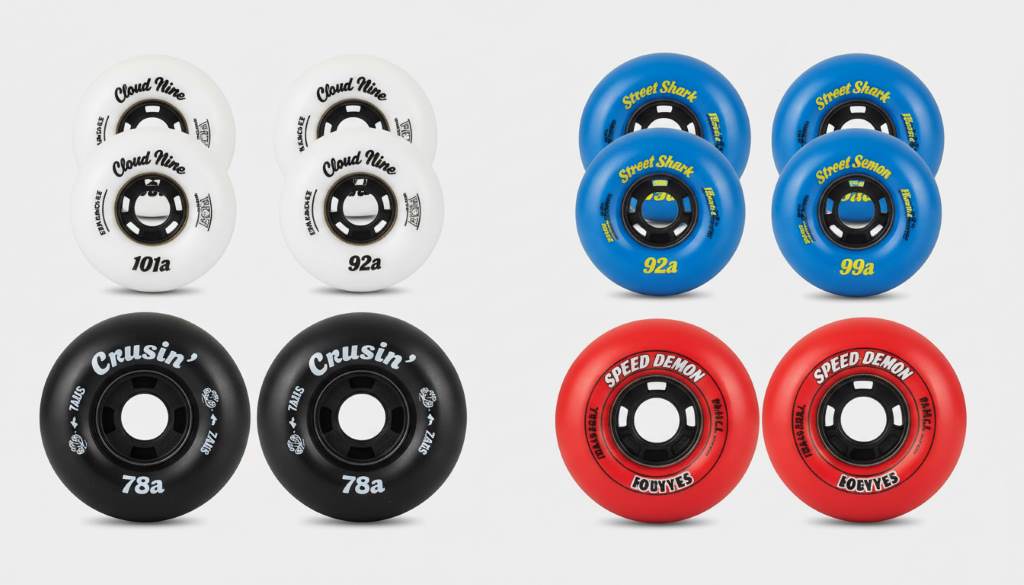
Wheels touch the ground directly. Their size and hardness change the ride dramatically.
Smaller wheels from 50 to 54mm accelerate quickly. They stay low for flip tricks. Larger wheels over 56mm roll faster and handle rough surfaces better.
Hardness uses the durometer scale. Hard wheels 99A or higher slide easily and go fast on smooth concrete. Softer wheels 78A to 87A grip cracks and pebbles.
Shape varies too. Rounded edges drift for slides. Sharp edges lock into grinds.
Match wheels to your terrain. Street skaters pick hard and small. Cruisers choose soft and big.
Bearings: Smooth Rolling Power
Bearings let wheels spin freely. Good ones make a huge difference over time.
Ratings like ABEC seem important, but skaters care more about build quality. Bones Reds or Bronson G3 stay popular for reliability.
Clean bearings regularly. Dirt slows them down fast.
High-quality bearings keep speed with less pushing. They last longer in dust and moisture.
Bushings and Risers: Fine Details
Bushings control turn rebound. Softer ones snap back slowly for smooth carves. Harder ones return fast for quick maneuvers.
Riser pads sit between trucks and deck. Soft risers absorb shocks on rough roads. Hard risers prevent wheel bite on deep turns.
Shock pads dampen vibrations further. Many cruisers add them for comfort.
How Setup Changes Performance
Small changes create big effects. Skaters learn this through trial and error.
Turning and Carving Feel
You lean to turn. Weight compresses bushings on one side. The truck pivots around the kingpin.
Loose trucks with soft bushings carve deeply. They feel surfy on transitions. However, they wobble at high speed.
Tight trucks with hard bushings turn slowly. They track straight and stable.
Wider trucks need more lean to turn the same amount. Narrower ones respond instantly.
Speed and Acceleration
Larger wheels maintain momentum better. They roll over obstacles easily.
Hard wheels have less rolling resistance. You push less on smooth surfaces.
Quality bearings reduce friction inside. Clean spins equal free speed.
Low setups accelerate faster from the ground. High setups cruise longer.
Stability at Speed
Wide trucks spread your stance. They resist tipping.
Lower trucks drop your center of gravity. Physics makes flips harder.
Hard bushings fight unwanted turns. They prevent speed wobbles.
Balanced weight distribution keeps the board predictable.
Pop and Trick Control
Light decks with steep concave snap higher. Tail response feels crisp.
Medium trucks balance stability and flick speed.
Small hard wheels stay out of the way during flips.
Stiff setups transfer energy directly to the tail.
Best Setups for Different Styles
No single perfect setup exists. Skaters match parts to their riding.
Street Skating Setup
Street riders focus on technical tricks. They choose responsive boards.
- Deck: 8.0 to 8.38 inches wide
- Trucks: Low or mid height, tight to medium
- Wheels: 50 to 54mm, 99A or harder
- Bushings: Medium to hard
This combination flips fast and grinds ledges cleanly. Pros like Nyjah Huston ride similar sizes.
Park and Transition Setup
Park skaters flow through bowls and ramps. They need pump and air control.
- Deck: 8.25 to 8.75 inches
- Trucks: Mid to high, medium looseness
- Wheels: 54 to 58mm, 97A to 99A
- Bushings: Medium soft
Wider stance helps lock into coping. Larger wheels maintain speed in transitions.
Cruising and Commuting Setup
Cruisers cover distance comfortably. They smooth out city streets.
- Deck: 8.5 inches or wider
- Trucks: High and loose
- Wheels: 60mm+, 78A to 85A
- Bushings: Very soft
Soft wheels absorb cracks. Loose trucks carve effortlessly. Many add riser pads for shock absorption.
Related:
Best Kids Sports Helmet :Bavilk Helmet Safety and Comfort Tested
Downhill and Freeride Setup
Speed riders demand precision and grip. They use specialized gear.
- Deck: Drop-through or top-mount longboard style
- Trucks: Precision reverse kingpin
- Wheels: 70mm+, 78A with grip edges
- Bushings: Tuned for stability
Wide trucks and hard bushings fight wobbles above 40 mph. Grip tape patterns help foot placement.
Common Setup Mistakes to Avoid
New skaters often make these errors. Fix them quickly.
Trucks too tight limit turning. You fight the board constantly.
Wheels too small on rough ground slow you down. Pebbles stop rolls dead.
Mismatched truck and deck width cause overhang. Boards feel unbalanced.
No risers on deep concave lead to wheel bite. Wheels jam during hard turns.
Old dirty bearings drag speed. Clean or replace them regularly.
Loose hardware vibrates off. Check bolts weekly.
Tuning Your Current Setup
You adjust most boards without buying new parts.
Loosen or tighten the kingpin nut in quarter turns. Test after each change.
Swap bushings easily. Conical shapes turn quicker. Barrel shapes stabilize more.
Rotate wheels to even wear. Flip them for fresh edges.
Clean bearings with solvent. Relubricate lightly.
Add or remove risers. Soft ones cushion. Hard ones raise slightly.
Small tweaks transform the feel. Experiment safely.
Conclusion
Your skateboard setup shapes every session. The right deck width stabilizes landings. Proper truck looseness carves turns smoothly. Wheels match terrain perfectly. Bushings dial responsiveness.
Start with your style in mind. Test changes gradually. Listen to how the board responds. Proper setup builds confidence and progression.
Grab your tools today. Loosen those trucks or swap wheels. Find the combination that flows best for you. Your next session will feel completely different.
FAQs
How do I choose the right deck width?
Measure your shoe size first. Size 9 or smaller works well with 8.0 to 8.25 inches. Larger feet need 8.38 or wider. Wider decks stabilize transitions. Narrower ones flip faster.
What wheel hardness suits beginners?
Start with 95A to 99A wheels. They balance speed and grip on most surfaces. Softer 85A absorbs bumps better for rough streets.
Should trucks be loose or tight?
Beginners keep them medium tight for stability. Loosen gradually as skills grow. Loose trucks carve beautifully but wobble if too extreme.
How can I prevent wheel bite?
Add riser pads to raise trucks. Tighten bushings slightly. Choose harder compounds or smaller wheels. These steps stop wheels from touching the deck.
Do expensive bearings make a big difference?
Quality matters more than price. Clean mid-range bearings outperform dirty high-end ones. Consistent maintenance keeps any set spinning smoothly.
References
- National Safety Council. Skateboarding Safety Statistics. https://www.nsc.org/community-safety/safety-topics/child-safety/skateboarding-safety
- Skate Warehouse. Skateboard Trucks Buying Guide. https://www.skatewarehouse.com/learning-center/skateboard_trucks_buying_guide.html
- Real World Physics Problems. Physics of Skateboarding. https://www.real-world-physics-problems.com/physics-of-skateboarding.html
- PubMed. Skateboarding Injuries Review. https://pubmed.ncbi.nlm.nih.gov/26018674