Spending a long day on the water is one of life’s great pleasures. However, the sun does not care how much you are enjoying yourself. UV rays reflect off the water’s surface and hit your face, neck, and ears from multiple angles at once. Without the right hat, a full day of fishing can leave you sunburned, exhausted, and at higher risk of long-term skin damage. Choosing the right fishing hat is not just about style. It is a genuine health decision.
This guide covers everything you need to know to pick the best fishing hat in 2026, so you can focus on the catch rather than the sunburn.
Why Your Choice of Hat Makes a Real Difference
Not every hat offers the same level of protection. A baseball cap, for example, leaves your ears and the back of your neck completely exposed. The sun reflects off the water and can still hit your face from below. Therefore, the shape, material, and construction of a fishing hat all matter more than most anglers realize.
Dermatologists recommend a UV protection rating — known as the Ultraviolet Protection Factor, or UPF — of at least 30 for outdoor clothing and hats. A UPF 50+ rating blocks more than 98 percent of UV rays. This is especially important when you are near water, sand, or snow, all of which amplify sun exposure significantly.
Understanding UPF Ratings and Why They Matter
UPF is to fabric what SPF is to sunscreen. The higher the number, the more protection the material provides. Here is a simple breakdown:
- UPF 15 to 24 — Good protection
- UPF 25 to 39 — Very good protection
- UPF 40 to 50+ — Excellent protection
Always look for a hat labeled UPF 50+. Many hats look protective but are made from loosely woven materials that allow UV rays to pass right through. A UV protection fishing hat made from tightly woven nylon or polyester will always outperform a cotton hat of the same shape.
Additionally, wet fabric loses some of its UV protection. If your hat gets soaked, it may no longer perform as well as its label suggests. Choose a hat with a water-resistant finish or one that maintains its UPF rating when wet.
The Most Important Features to Look For
Brim Width and Coverage
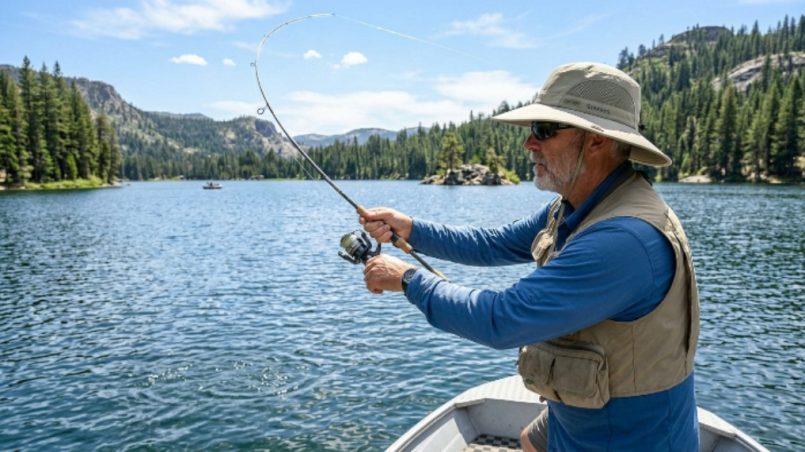
The brim is your first line of defense. A wider brim means more shade over your face, ears, and neck. For serious sun protection, look for a brim of at least three inches all the way around. Full-brim hats, also called bucket-style hats, are among the most popular choices for anglers because they cover all angles.
Some hats feature a longer bill in the front, similar to a traditional cap. These work well for blocking direct sunlight in front of you. However, they leave your neck and ears exposed. If you fish in open water or during peak sun hours, a full-brim design is the smarter choice.
Material and Breathability
Fishing in the heat while wearing a heavy, stuffy hat is miserable. Therefore, the fabric your hat is made from matters just as much as its shape. A breathable fishing hat allows air to flow around your head, keeping you cooler for longer.
Look for hats made from lightweight, moisture-wicking materials such as nylon, polyester mesh, or performance blends. Many top-rated fishing hats in 2026 feature mesh panels on the sides or crown. These panels let heat escape while still blocking direct sunlight.
Avoid thick cotton hats for warm-weather fishing. Cotton holds moisture and dries slowly, which makes it uncomfortable in humid conditions. It also tends to have a lower UPF rating than synthetic fabrics.
Adjustability and Fit
A hat that blows off in the wind is not doing its job. Look for hats with an adjustable chin strap or drawcord. This feature is especially useful on open boats where the wind picks up unexpectedly. A secure fit also means you can focus entirely on fishing rather than constantly adjusting your hat.
Most fishing hats come in one-size-fits-most designs with an internal sweatband and an adjustment mechanism at the back. Some higher-end models offer multiple size options for a more precise fit. Either way, the hat should sit comfortably without feeling tight.
Neck and Ear Coverage
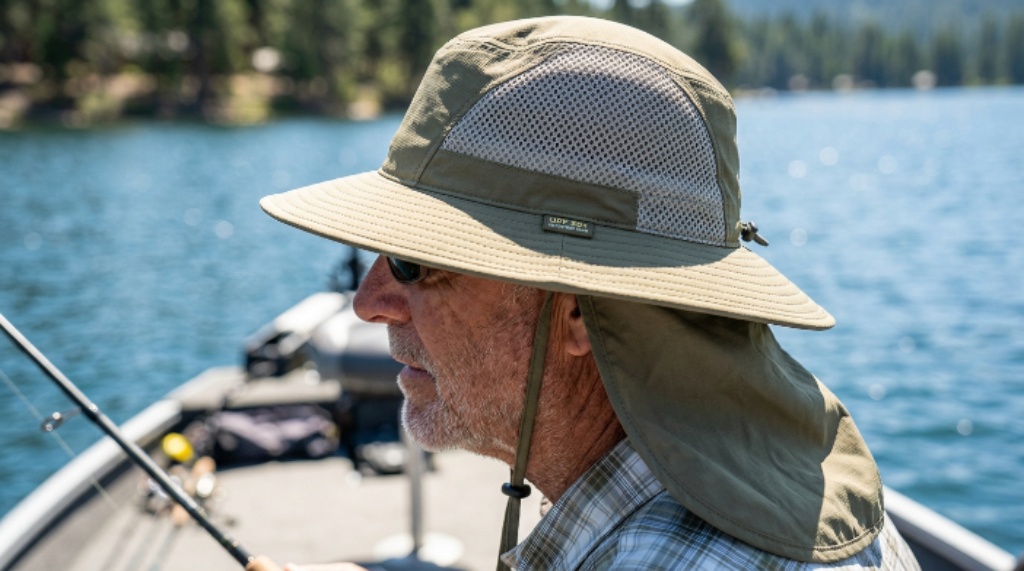
Standard hats leave your ears and the back of your neck exposed. This is where many anglers develop the worst sun damage over time, often without realizing it. Some fishing hats come with a built-in neck flap, also known as a cape or curtain, that folds down when needed and tucks away when not in use.
Additionally, some hats include side flaps that fold down over the ears. These add significant protection during long days on the water. They may look unusual at first, but experienced anglers quickly appreciate the extra coverage.
Different Hat Styles and Who They Suit Best
Bucket Hats
Bucket hats offer all-around coverage and are lightweight enough to pack into a tackle bag. They are ideal for kayak fishing, shore fishing, and any situation where you are fully exposed to the sky. A good sun hat for anglers in this style will have a UPF 50+ rating, mesh ventilation, and a packable design.
Wide-Brim Safari Hats
Safari-style hats have a broader brim and a more structured crown. They offer excellent shade and tend to stay in place well. These are a great option for anglers who fish from boats or elevated positions where sun exposure comes from all directions.
Performance Cap with Neck Flap
For anglers who prefer a forward-facing bill, performance caps with an attachable neck flap offer a practical middle ground. The cap keeps the sun out of your eyes while the neck flap protects the areas a standard cap cannot reach. Many of these are designed to work with polarized sunglasses for full-face coverage.
Boonie Hats
Boonie hats are military-inspired wide-brim hats with a structured crown and ventilation eyelets. They are durable, packable, and often come with a chin cord. These hats work well in both freshwater and saltwater environments.
Color Choices and Their Effect on Protection
Color plays a surprisingly important role. Darker colors absorb more UV radiation, which means less of it passes through to your skin. However, darker colors also absorb more heat, which can feel uncomfortable on a hot day. Lighter colors reflect heat but may offer slightly less UV absorption.
Many manufacturers address this by using tightly woven light-colored fabrics treated with UV-blocking agents. Therefore, color alone should not be your deciding factor. Always check the UPF rating on the label rather than choosing by color alone.
How to Care for Your Fishing Hat
A well-made fishing hat can last for years with proper care. Hand wash it with mild soap after salty or sweaty trips. Avoid putting it in a dryer, as heat can damage the fabric’s UV-blocking properties and deform the brim. Air dry it in the shade rather than in direct sunlight.
Additionally, inspect the hat regularly for signs of wear. Thin spots, faded areas, or fraying edges can reduce its UV protection over time. If your hat has seen heavy use for more than two seasons, it may be worth replacing it even if it still looks acceptable.
Top Tips for Maximizing Sun Protection on the Water
Even the best hat works better as part of a complete sun protection strategy. Here are a few additional steps to keep you safe:
- Apply a broad-spectrum sunscreen of SPF 30 or higher to any exposed skin
- Wear UV-protective sunglasses to protect your eyes and the skin around them
- Choose long-sleeve fishing shirts made from UPF-rated fabric
- Seek shade during the peak UV hours between 10 a.m. and 4 p.m. when possible
- Stay hydrated, as dehydration worsens the effects of heat and sun exposure
Conclusion
Choosing the right fishing hat in 2026 comes down to a few key factors: UPF rating, brim width, breathability, fit, and coverage for your ears and neck. A quality UV protection fishing hat is one of the best investments any angler can make. It protects your skin, reduces glare, and keeps you comfortable through long days on the water.
Whether you prefer a packable bucket hat, a wide-brim safari style, or a performance cap with a neck flap, the best hat for you is the one that fits well, stays on in the wind, and genuinely blocks harmful UV rays. Do not let sun damage cut your time on the water short. Choose wisely, care for your hat properly, and it will serve you well for many seasons to come.
Frequently Asked Questions
What UPF rating should a fishing hat have?
Look for a UPF rating of 50+. This blocks more than 98 percent of UV rays and provides the highest level of protection available in clothing and hats. Anything below UPF 30 is not ideal for prolonged time on the water.
Are wide-brim hats better than baseball caps for fishing?
Generally, yes. Wide-brim hats cover your ears, neck, and face from all angles. Baseball caps only shade your forehead and eyes, leaving large areas of skin exposed. For long days in open sun, a wide-brim hat is the safer option.
Can I wear a regular sun hat for fishing, or do I need a fishing-specific hat?
You can wear any UPF-rated wide-brim sun hat for fishing. However, fishing-specific hats often include practical extras like chin cords, moisture-wicking sweatbands, and packable designs that make them more suitable for active use on the water.
How do I know if my hat’s UPF rating is still effective after washing?
Check the manufacturer’s guidelines. Most quality UPF-rated hats retain their rating for around 30 to 40 washes if cared for properly. Avoid machine drying and harsh detergents, as these can degrade the UV-blocking properties of the fabric faster.
What is the best material for a breathable fishing hat in hot weather?
Lightweight nylon and polyester performance blends are the best options. They wick moisture away from your head, dry quickly, and often feature mesh panels for added airflow. Avoid cotton in warm weather, as it holds sweat and dries slowly.
Related Topics:
How to Choose Warm Winter Perfumes on a Budget
Best Kids Sports Helmet :Bavilk Helmet Safety and Comfort Tested