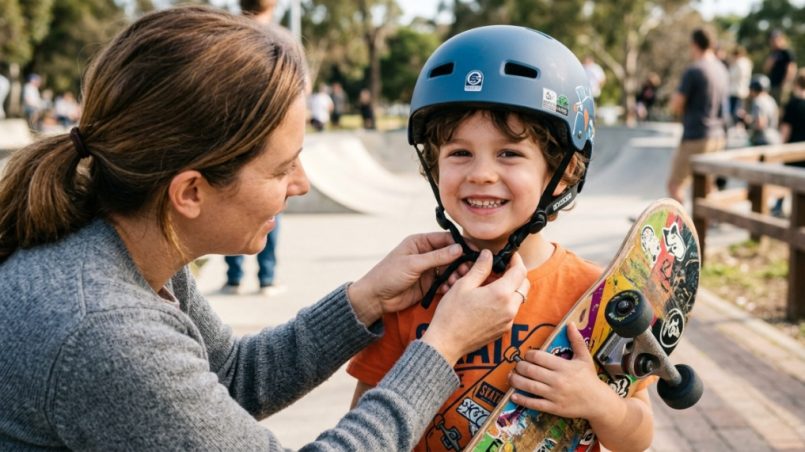
You walk into a skate shop in Brooklyn or Queens with your child, feeling completely overwhelmed by the wall of pads, helmets, and protective gear. Every package promises safety, but how do you know which set actually protects your child on New York’s rough sidewalks and challenging skateparks? This is the exact problem most parents face when searching for reliable kids skateboard safety gear New York families can trust. The reality is that not all safety gear meets the unique demands of urban skating. This guide cuts through the marketing noise and gives you a practical, evidence-based system for choosing gear that truly protects your child during every ride, every trick, and every fall.
What Makes Kids Skateboard Safety Gear Different from Adult Gear?
Size and Proportions Matter Most
Children’s bodies are not simply smaller versions of adult bodies. Their center of gravity is different, their bones are still developing, and their heads are proportionally larger relative to their body size. Kids skateboard safety gear is specifically engineered with these differences in mind. The padding distribution, strap placement, and shell thickness are all calibrated for a child’s anatomy to ensure maximum protection without restricting natural movement.
Impact Absorption Requirements for Younger Skaters
Children fall differently than adults. They tend to land harder on their wrists, knees, and elbows because they lack the same muscle control and reflex development. Quality kids safety gear uses multi-layer foam systems that absorb more impact energy than generic adult gear. This extra cushioning is critical for preventing fractures and scrapes during the learning process.
Weight Distribution and Comfort
If gear is too heavy, children fatigue quickly and lose balance more easily. Properly designed kids skateboard safety gear New York brands carry uses lightweight materials that distribute weight evenly across the body. This prevents the gear from becoming a burden and keeps your child comfortable enough to focus on skating, not adjusting straps.
Which Type of Helmet Is Best for a Child Skater in New York?
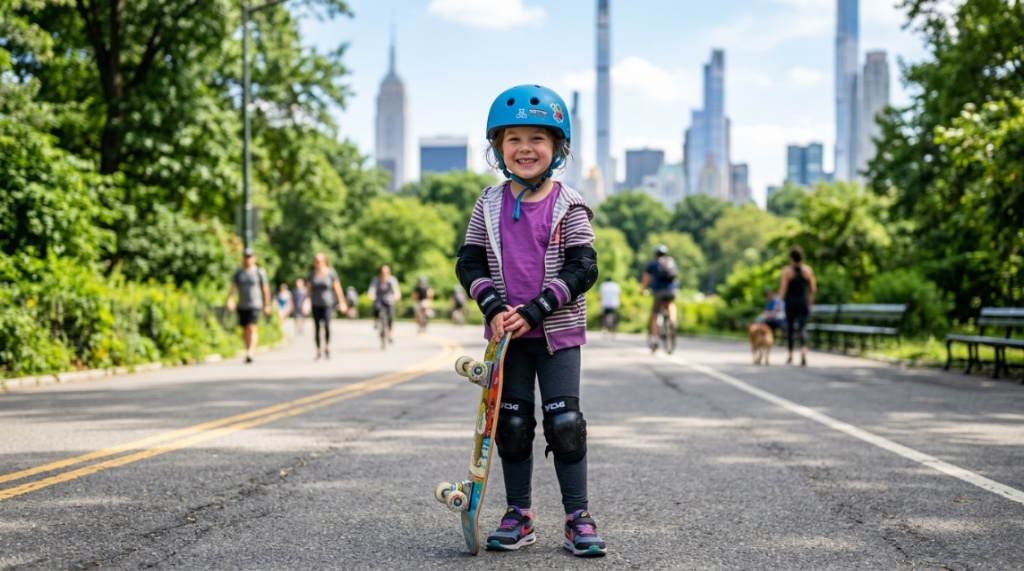
CPSC Certification Is Non-Negotiable
Only helmets certified by the Consumer Product Safety Commission (CPSC) meet the minimum safety standards for skateboarding. Do not accept a helmet labeled only for biking or recreational use. Look specifically for CPSC 1203 certification on the inside sticker. This ensures the helmet has passed rigorous impact tests at speeds and angles relevant to skateboarding falls.
Multi-Impact vs. Single-Impact Helmets
For kids, multi-impact helmets are generally the better choice. These helmets use expanded polystyrene (EPS) foam that can withstand multiple moderate impacts before needing replacement. Single-impact helmets crush upon first impact and must be discarded immediately. Since children fall frequently, multi-impact helmets offer better value and consistent protection over time.
Proper Fit Checklist for Your Child
- The helmet should sit level on the head, not tilted back or forward
- The front edge should be one to two finger-widths above the eyebrows
- The chin strap should form a V shape just below the ears
- When your child shakes their head, the helmet should not move independently
- Use the adjustable fit ring inside the helmet to fine-tune the snugness
How Do I Choose the Right Knee Pads and Elbow Pads for Urban Skating?
Hard Shell vs. Soft Shell Protection
Hard shell knee and elbow pads feature a plastic cap over dense foam. These are essential for New York street skating because they slide on concrete rather than grabbing and twisting. Soft shell pads are comfortable but do not slide effectively, which can cause your child to tumble awkwardly. For city skating, always choose hard shell pads with a smooth outer cap,Once you have the right protective equipment secured, remember that a proper skateboard setup affects performance and control, making it essential to choose components sized correctly for young riders.
Strap Systems That Stay Put
The best kids pads use a three-strap system: one above the joint, one below, and a third elastic strap that wraps around the calf or forearm. This design prevents the pad from slipping down during a fall. Test the straps by having your child jump and land on their knees. If the pad shifts more than half an inch, it is not secure enough for actual skating.
Material Breathability for Long Sessions
New York summers are hot and humid. Look for pads with mesh ventilation panels and moisture-wicking inner lining. Neoprene padding without ventilation will trap sweat and cause skin irritation. Some brands now offer antimicrobial liners that reduce odor and bacteria buildup, which is especially useful for kids who skate multiple days in a row.
What Wrist Guards Actually Prevent Injuries?
The Splint Design Is Critical
Most wrist fractures in young skaters occur when they instinctively put their hands out to break a fall. Effective wrist guards have a rigid plastic splint on both the palm and back of the hand. This splint prevents hyperextension of the wrist while still allowing full range of motion for gripping the board. Avoid wrist guards with only palm protection, as they do not prevent backward bending.
Size Guidelines for Growing Hands
Measure your child’s hand circumference around the knuckles, excluding the thumb. This measurement dictates wrist guard size. Too large and the splint will shift sideways. Too small and circulation becomes restricted, causing numbness. Most reputable brands provide a sizing chart based on hand circumference in centimeters. kids skateboard safety gear New York retailers often offer fitting services, so take advantage of in-store sizing if possible.
Closure Mechanisms That Fit Kids
Younger children struggle with complex straps. Look for wrist guards with a single hook-and-loop strap that is easy to tighten independently. Some models include a finger loop that helps children pull the guard into the correct position before securing the strap. Ensure the closure is snug but not cutting off circulation, and check for red marks after removal.
Can My Child Wear Bike Gear Instead of Skate Gear?
Protection Zones Are Different
Bike gear is designed for forward falls and road rash, while skaters need protection against lateral falls, twists, and hard impacts on concrete. Skate knee pads cover more of the kneecap and shin area, while bike pads are shorter and narrower. Using bike pads for skateboarding leaves critical areas exposed, particularly the sides of the knees and elbows.
Helmet Coverage Varies Significantly
Bike helmets often have more ventilation holes and less coverage at the back of the head. Skate helmets are rounder and extend lower on the back of the skull to protect against backward falls, which are common when learning tricks. The back of the head is one of the most vulnerable areas during skateboarding falls, and bike helmets simply do not cover it adequately.
Impact Testing Standards Are Not Interchangeable
While both types of gear may carry CPSC certification, skate-specific gear undergoes additional testing for repeated impacts at different angles. Bike gear is tested primarily for single-impact scenarios at higher speeds. For the varied and unpredictable falls of skateboarding, purpose-built gear is always the safer choice.
How Should Safety Gear Fit a Child Properly?
The Snugness Test
Gear that is too loose will shift during a fall and expose the very areas it is meant to protect. Gear that is too tight restricts movement and can cause discomfort or circulation issues. A proper fit means the pad covers the entire joint without gaping, and the strap leaves a single finger-width of space between the strap and the skin.
Buying Gear That Accommodates Growth
Children grow quickly, but buying oversized gear is dangerous. Instead, look for gear with adjustable straps and expandable closures that offer a wider range of adjustment. Many quality brands design their children’s gear to accommodate two to three inches of growth through adjustable fit systems rather than requiring a completely new set every season.
The Movement Test Before First Use
Before your child ever steps on a skateboard, have them wear all their gear at home for 20 minutes. Ask them to bend, squat, reach overhead, and pretend to fall. The gear should not pinch, slide, or restrict natural movement. If your child complains about any specific piece during this test, adjust the fit or try a different size or brand.
When Should I Replace My Child’s Skate Safety Gear?
After Any Significant Impact
Even if no cracks are visible, the foam inside helmets and pads compresses upon impact and loses its ability to absorb energy in future falls. Any time your child takes a hard fall where their head or joints hit the ground with force, inspect the gear thoroughly. If you see any indentation in the foam or cracks in the plastic shell, replace the affected piece immediately.
Visible Wear and Tear Indicators
Check for frayed straps, torn Velcro, cracked plastic caps, or foam that has become hard and brittle. Exposure to New York’s temperature extremes and humidity accelerates material degradation. If you notice any of these signs, the gear is no longer providing full protection. Do not wait for a fall to discover that worn gear fails.
Growth Milestones That Require New Gear
If your child has grown two inches in height or gained more than 10 pounds since the last purchase, it is time to reassess fit. Even if the gear seems functional, the changed body proportions can affect how the gear sits on the body during a fall. Proper fit is the foundation of protection, and growth outpaces that fit sooner than most parents expect.
What Features Should I Look for in Safety Gear for New York Streets?
Reflective Elements for Visibility
New York streets are busy, and low-light conditions are common, especially in fall and winter. Gear with built-in reflective strips or bright color options helps drivers and other skaters see your child from a distance. Some brands offer gear with detachable reflective patches that can be added to any set.
Durability Against Concrete and Asphalt
New York’s rough surfaces are unforgiving. Look for gear with reinforced stitching and double-layered fabric at stress points. Hard plastic shells should be made from high-impact polypropylene, not thin ABS plastic that cracks easily. Check online reviews specifically mentioning durability on concrete surfaces to gauge how well a product holds up in urban environments.
Washable and Odor-Resistant Materials
Kids sweat, and gear gets dirty quickly. Removable, machine-washable padding is a game-changer for parents. Foam that absorbs sweat without being washable will develop odors and bacteria. Some newer gear uses bamboo charcoal liners that naturally resist odors and can be hand washed without degrading the foam.
Is It Worth Buying a Complete Safety Gear Set or Individual Pieces?
Pros of Buying a Complete Set
Complete sets are often more affordable than purchasing each piece separately. They also ensure that all pieces are designed to work together, with consistent sizing and color matching. For beginners who need everything at once, a set is a practical and cost-effective starting point. Most sets include helmet, knee pads, elbow pads, and wrist guards.
Pros of Buying Individual Pieces
Buying individually allows you to prioritize quality on the pieces that matter most for your child’s skating style. A child who only does flat ground cruising may need excellent knee pads but can use basic elbow pads. Individual purchasing also lets you upgrade one piece at a time without replacing the entire system when something wears out.
When to Choose a Set vs. Mix and Match
| Situation | Recommended Approach |
|---|---|
| Complete beginner under 8 years old | Buy a quality complete set for consistency and simplicity |
| Experienced skater needing specific upgrades | Buy individual pieces for targeted improvement |
| Skating mainly at skateparks | Buy individual pieces prioritizing knee pads and helmet |
| Skating streets and rough surfaces | Buy a complete set with hard shell pads for full coverage |
| Limited budget for first gear set | Buy a complete set from a reputable brand |
How Can I Teach My Child to Use Safety Gear Correctly?
Model the Behavior Yourself
Children learn by watching. If you wear your own safety gear while skating with them, they see protection as normal and necessary. Put on your helmet and pads every time, even for short sessions. This consistent example reinforces that safety gear is not optional or embarrassing, but simply part of the sport.
Make Gear Check Part of the Routine
Before every skate session, create a five-point gear check that your child can do independently. Check helmet fit, knee pad position, elbow pad security, wrist guard closure, and shoe grip. This ritual takes 30 seconds but builds lifelong habits. Use a simple checklist printed on a card that your child keeps in their skate bag.
Address Social Concerns Directly
Some children resist safety gear because they think it looks uncool or because friends do not wear it. Acknowledge these feelings without judgment. Explain that professional skaters wear full protective gear during competitions and filming. Show them videos of their favorite skaters wearing safety gear. Frame gear as a tool that helps them progress faster, not a restriction.
Frequently Asked Questions
What age should a child start wearing skate safety gear?
Children should wear full safety gear from their very first time stepping on a skateboard, regardless of age. The American Academy of Pediatrics recommends protective gear for all wheeled sports starting at age 5, but younger children can start with properly fitting gear if they show interest in skating.
Can I buy used safety gear for my child?
Used helmets should never be purchased because you cannot verify their impact history. Used pads can be acceptable if the foam is still firm, straps are intact, and there are no cracks in plastic shells. Inspect every piece thoroughly and sanitize before first use. Gear that has visible wear should be replaced.
How much should I expect to spend on quality kids skate gear?
A complete quality set of kids skateboard safety gear typically costs between $80 and $150. Avoid sets under $50, as they often use inferior materials that fail upon impact. Investing in mid-range gear from established brands provides the best balance of protection, durability, and comfort for growing skaters.
Does my child need safety gear for electric skateboards?
Yes, electric skateboards reach higher speeds than traditional boards, making safety gear even more critical. The same pads and helmets used for regular skateboarding are appropriate, but consider adding slide gloves and a full-face helmet if your child rides faster than 15 miles per hour.
How do I clean skate safety gear without damaging it?
Remove any removable padding and hand wash with mild soap and cool water. Air dry completely away from direct heat. Wipe down hard shells and plastic components with a damp cloth. Never machine wash or machine dry safety gear, as heat and agitation can degrade foam and weaken straps.
What is the most important piece of safety gear for a beginner?
A properly fitted CPSC-certified helmet is the single most important piece. Head injuries are the most serious risk in skateboarding, and a good helmet dramatically reduces the severity of impact. Knee pads come second, as beginners fall forward onto their knees most frequently.
Can my child skate without elbow pads or wrist guards?
While a helmet and knee pads provide the most critical protection, wrist guards and elbow pads prevent painful fractures and scrapes that can discourage a child from continuing to skate. For the best protection and confidence building, use all four pieces consistently until your child develops advanced falling techniques.
Conclusion
Choosing safe kids skate gear in New York does not have to be overwhelming. Focus on three core principles: proper fit for your child’s body, appropriate certification for every piece, and materials designed for the unique demands of urban skating. Start with a quality complete set from a reputable brand, then upgrade individual pieces as your child progresses. Check all gear after every hard fall and replace anything that shows wear. Most importantly, make safety gear a non-negotiable part of every skate session from day one. Your child’s confidence will grow with the knowledge that they are protected, allowing them to focus on the joy of learning new skills. Take the first step today by assessing your child’s current gear and making necessary upgrades. Every properly equipped skater is a safer, happier, and more confident skater.