Picture this: you’re on Lake Lanier at dawn, mist rolling off the water, and your line goes taught. But instead of a strike, you reel in nothing—because your bobber was wrong for the conditions. Or worse, it cracked on the first cast. Choosing the right bobber isn’t an afterthought; it’s the difference between a trophy bass and a frustrating day. Yet, with hundreds of floats on the market, anglers often grab whatever’s cheapest at the tackle shop. That’s a mistake. Whether you’re chasing bream on the Flint River or targeting deep crappie on West Point Lake, the correct bobber improves your presentation, strike detection, and hook-up ratio. Let’s fix your setup so you can focus on fishing, not fiddling with tackle.
We’ll break down exactly how to match bobbers to Georgia’s diverse waters—from stained reservoirs to fast-moving rivers—with specific, tactical advice you can use on your next trip.
Why Does Bobber Choice Matter More in Georgia Than Other States?
Georgia offers a unique mix of angling environments: massive Army Corps reservoirs like Clark’s Hill and Hartwell, tannic blackwater rivers like the Okefenokee, and cool mountain trout streams in the Chattahoochee National Forest. No single bobber works everywhere. The state’s fluctuating water levels, prevalent hydrilla grass, and strong winds on open lake basins demand specific float types. Using a heavy, round plastic bobber in a fast-current river is a recipe for tangles and missed fish. Conversely, a tiny quill tip on a windy main-lake point won’t stay upright. The right pick ensures your bait drifts naturally, stays visible, and presents at the precise depth target fish are holding.
Understanding Georgia’s Core Water Conditions
Stained water dominates after heavy rains, especially below Buford Dam on the Chattahoochee. High visibility differences dictate whether you need bright orange or subtle clear bobbers. Additionally, shallow flats (under 6 feet) in Lake Oconee require lighter floats, while deep ledges on Lanier call for slip bobbers that can be adjusted quickly.
Target Species and Seasonal Patterns
Spring ‘bedding’ season on Lake Guntersville calls for sensitive floats to detect subtle pecks, while summer topwater action on Lake Seminole requires larger, noisier bobbers that create surface disturbance to attract aggressive bass.
Wind and Weather Resistance
Georgian summer storms roll in fast. A standard round bobber gets pushed by waves, dragging your bait unnaturally. Heavier, weighted bobbers or slim ‘cigar’ floats cut through chop better, keeping your presentation vertical and steady, Once you have your tackle box stocked with the right bobbers for your freshwater trip, make sure you have the proper footwear for your next excursion by checking out our guide on Saltwater vs Freshwater Fishing Shoes
What Are the Main Bobber Types Used by Georgia Anglers?
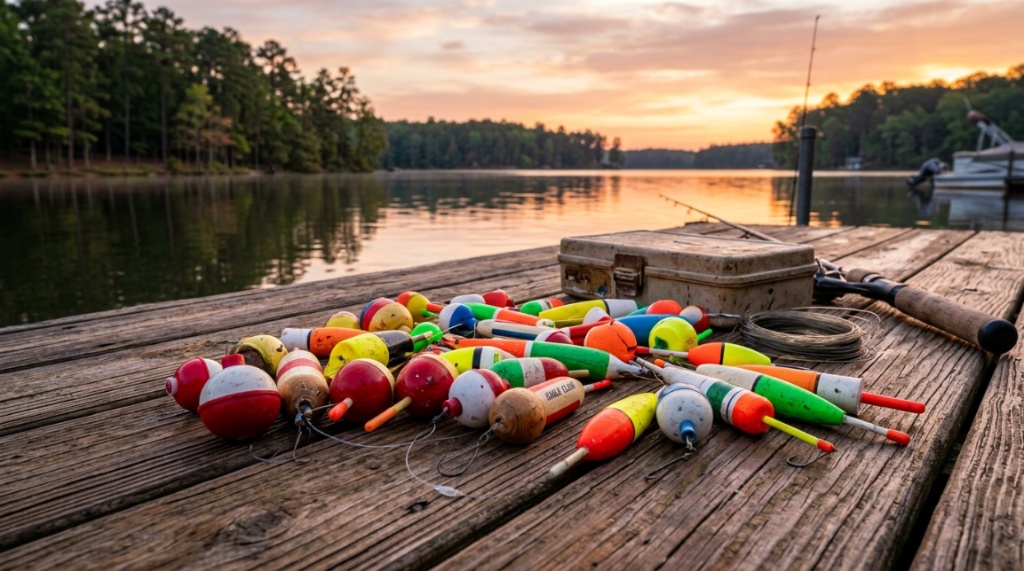
Zooming out, we can categorize bobbers into five core styles: round plastic, slip, quill/stick, clip-on, and pencil/cork. Each serves a distinct purpose. Round plastic bobbers are best for calm, shallow water and live bait. Slip bobbers are ideal for deep water and drifting. Stick bobbers excel in rivers and wind. Clip-ons offer speed for panfish. Pencil floats are specialized for steelhead, though common for trout stocking streams. In Georgia, round plastic and slip bobbers dominate for bass and bream, while quill sticks are loved by river anglers.
Round Plastic Bobbers (The Classic)
These are perfect for beginners starting with bream on Lake Blackshear. They’re easy to cast but tend to create resistance on strikes. However, they’re prone to cracking on rocky banks. Choose heavy-duty versions with brass grommets for longevity.
Slip Bobbers for Deep Structure
If you’re fishing deep points on Lake Sinclair, you need a slip float. It slides up your line, allowing you to cast a long distance and fish depths from 10–40 feet. The ability to stop the bobber at a precise depth is critical for suspended crappie and bass.
Quill and Stick Bobbers for Current
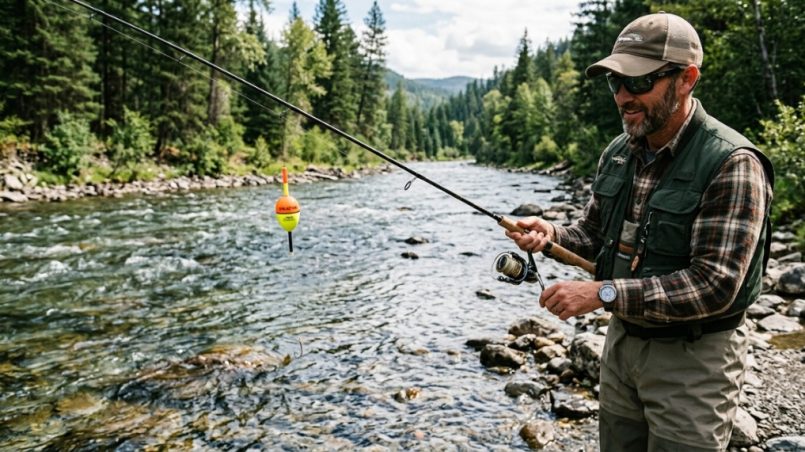
Fishing the Sautee and Chattahoochee tailwaters? Use a slim stick bobber. The surface disturbance is minimal, creating less drag, and the vertical profile detects even the lightest trout bite that a bulbous float would miss.
| Bobber Type | Best For | Visibility | Castability |
|---|---|---|---|
| Round Plastic | Shallow Bream/Bass | High | Good |
| Slip | Deep Structure | Medium | Excellent |
| Quill/Stick | Rivers & Wind | Low/Medium | Fair |
| Clip-On | Fast Panfish | High | Fair |
| Pencil/Cork | Trout Streams | Medium | Good |
How Do You Match Bobber Weight to Wind Conditions?
Wind is your enemy in Georgia’s open reservoirs. For winds under 5 mph, a standard 1/4-ounce round bobber is sufficient. For winds exceeding 15 mph, like a March day at West Point, you need a heavier, streamlined float—often a 3/4-ounce casting bobber. The key is ensuring your bobber stays upright and remains sensitive enough to dip on a bite, not just rock on waves. Use
Key Takeaway: The bobber’s weight must exceed the wind’s lateral force but remain under the threshold where a fish feels resistance when inhaling the bait.
Using Thill “Big Water” Bobbers
Look for bobbers specifically designed with a low center of gravity and a threaded cap for weights. This prevents the common issue of bobbers lying flat in the waves, which causes missed bites that you never see.
Steadying with Split Shot
Also, use a split shot 6–8 inches above your hook. This allows the bobber to sit higher in the water column, giving it a smaller ‘footprint’ against the wind, reducing drag and keeping your bait on point.
Considering the drift technique
If you’re drifting live shiners for stripers on Lanier, switch to a ‘balloon bobber’ or a weighted slip float. These don’t maneuver well in high winds but can be set for deep drift retrieves that keep worms bouncing naturally to the bottom.
Which Slip Bobber Rig is Best for Deep Georgia Reservoirs?
For deep reservoirs like Hartwell (depths exceeding 50 feet), the Thill Pro Series Slip Bobber is the gold standard. It uses a simple thimble stop that you tie to the line, allowing infinite adjustment. The float itself is balsa wood, making it ultra-sensitive. For best results, pair it with a 1/16-ounce jig head or a live minnow. The system allows you to cast far from the boat and control the depth to the exact suspended zone, which is critical for offshore brush piles.
Setting Up the Knotless Stop System
Begin by threading a bobber stop onto your main line, followed by a bead (to protect the knot), then the slip bobber, and finally add a small weight or hook. Use braided line for better hooksets, as monofilament can stretch and cause missed strikes on deep bites.
Depth Adjustments for Summer Thermoclines
During July, when oxygen levels drop, bass hold at 15–20 feet. Set your bobber stop at that depth. As the sun climbs higher, the fish push deeper; clip the stop down incrementally to follow the active baitfish.
Avoiding Snags on Timber
Georgia reservoirs are notorious for submerged timber. When fishing a slip bobber,
- Use a quick-release cleat for instant depth changes.
- Always use a heavier weight on the bottom to keep the bait vertical.
- Match the bobber size to the bait so the line isn’t pulled taut underwater; a slack line prevents snags as you reel.
Can You Use Bobbers Effectively in Fast Current Rivers?
Yes, but you must switch to fly fishing floats or customized ‘drift bobbers.’ Currently, a standard round float is useless; it gets swept under the surface instantly. For rivers like the Toccoa, use a Thill “Noodle” float or a corkie with a tight line. These bobbers are placed directly on the line against a knot, allowing them to track through fast water while maintaining a natural, drag-free drift so your bait looks like it’s floating naturally.
Choosing Heavy Drift Bobbers
Seek floats with a slim profile and internal tungsten weighting. This allows them to cast into headwinds and hold up in the current. Heavier bobbers also enable deep drifts in deep pools where trout or shoal bass are holding tight to the bottom.
Reading the Seam for Successful Drifts
The ‘seam’—where fast water meets slow water—is where fish wait. Toss your bobber upstream of the seam and allow it to drift naturally. If it starts spinning, the bobber is too big. You want a subtle drift said to a ‘tick’ on the bottom occasionally.
Popping for Smallmouth Bass
When targeting big shoal bass on the Flint, use a 1/2-ounce round bobber with a ‘popping’ action. Twitch the rod tip to create a subtle ‘plop’ on the surface, mimicking a struggling insect. This noise attracts fish from deeper runs.
How Do You Choose Bobber Size for Crappie Fishing in Georgia?
Crappie fishing on Georgia lakes requires finesse. The ideal bobber isn’t huge; you want a 1/8 to 3/16-ounce pencil-style bobber for deep water and a simple 1/16-ounce for docks. The sensitivity is paramount. You need to see the tiniest tap. Larger bobbers create too much buoyancy, pulling the hook away from the fish. In spring, look for small, cylindrical floats that ‘shoot’ up when freed.
Using Small Slip Floats for Docks
Dock shooting sees you pitching to the shadow line. A tiny 3/8-inch slip bobber that rides the line with minimal resistance is key. Use a long rod (10–12 ft) and keep your line tight to detect the subtle spine twitch that indicates a crappie holding onto the minnow before swallowing it.
Best Materials for Visible, Quiet Drops
Pick a bobber made of cork, not plastic; it makes a softer ‘plunk’ when entering the water, scaring fewer fish. Also, ensure it has a glow-in-the-dark top for low-light docking conditions. A bobber that sits low in the water is much easier to see in low light.
Synchronizing with Jigging Techniques
When slow-trolling for crappie, a slip bobber works great, but you must match the bobber to the jig weight. The bobber should just barely hold your jig up. If it’s sinking, you’ve got a mismatch. The bobber should be about 50% heavier in buoyancy than the jig weight.
Is a Weighted Bobber Worth It for Panfish on Georgia Lakes?
Absolutely, for species like bluegill and shellcracker, weighted bobbers are underrated. They allow longer casts into the wind and get bait down quickly, bypassing pesky skipjack or shiners that steal your bait near the surface. Many have a fixed weight at the bottom, aiding casting accuracy, and a spring-loaded clip that speeds up line changes. They are very efficient offshore farmers.
Fishing In Dense Weeds around Lake Eufaula
Weighted bobbers are critical around Hydrilla. The weight pulls the line down, preventing the line from floating over the grass and dragging the hook away from fish. The bobber will sit upright in the holes within the grass.
Increasing Casting Distance
Source a bobber with an internal weight. That allows your 4-weight rod to load properly. You can easily double your casting distance and target deep humps that hold large shellcrackers in late April.
Controlling Depth in lakes
Rather than using a bobber stop, these weighted models often have an adjustable line lock that allows the line to slip through slowly until you set the depth. For bream beds at 6 feet, just slide the float up and you’re done.
Which Top Bobbers Georgia Lake Anglers Should Try in 2026?
Looking to upgrade your tackle box for the new season? The market has advanced with high-visibility coatings and more durable plastics that can withstand rough bank casting. Anglers in Georgia are ditching the cheap, cracked floats and moving toward high-performance models. For a comprehensive list of top brands, check out this resource on top bobbers for Georgia lakes; it highlights specific models that perform well on Chattahoochee and Lanier. Focus on those with a tungsten center pin for instant balance.
Variable Lighting and Visibility Coating
Look for bobbers using ‘hi-viz’ paint with a durable UV coating. In Georgia’s often tannic water, red is more visible in dark water while chartreuse excels in clear water. The best bobbers include interchangeable inserts to switch colors.
Durability Features
Ensure the stem of the bobber is either metal or a reinforced composite. The plastic stems on old floats snap quickly when snapped back to cast or when fighting a large fish. The new models are practically unbreakable.
Versatile Kit Setup
Instead of buying 3 different packages, choose a kit. A multi-pack with varying sizes (1/16, 1/8, 3/16) is a wise investment that covers most of your fishing needs, from panfish to bass. This ensures you always have the right size on hand.
How Do You Rig a Bobber to Prevent Line Twist on Georgia Bluffs?
Line twist is a major issue when using bobbers. To prevent this, always use a swivel. Tie a size 10 barrel swivel 12 inches below your bobber stop. The bobber will likely rotate in the water due to currents. The bushing in the bobber promotes spin; a swivel stops this from transferring to your hook and bait. Additionally, keep your line tight on the retrieve to avoid slack loops wrapping around your bobber stem.
The Stop-Bead-Bobber Order
Never attached the bobber directly to a line. Always use a small crimp on the bottom of the bobber to hold it, then add your weight on the line below that. This reduces stress on the float stem.
Using a Mono Leader
Leaders are important. Do not tie direct braid to a bobber. Braid floats and can cause the bobber to lie over. Use 6 inches of fluorocarbon leader between the bobber and your hook to ensure the line sinks, keeping the bobber upright and true.
Windy Conditions Retrieval
If you see the line slipping and causing a twist, reel it in, pull the bobber down to your rod tip, and let it ‘spool’ for 30 seconds with the line out in the water. This untwists them. Otherwise, you’ll see severe tangles.
What Are the Signs That Your Bobber Setup Is Wrong?
Analyze the behavior of your float. If you have many bites but no hookups, the bobber is likely too big or you’re setting the hook too late. If you are getting snagged constantly, the bobber is too small and doesn’t keep your bait up. Also, if the bobber floats at an angle, it causes unnatural drag, spooking finicky bream. Finally, if the bobber is hard to see in waves, you have poor contrast; you’ll miss subtle takes.
Pro Insight: Many anglers set the hook as soon as the bobber dips. For panfish, wait one second after the dip to let the fish turn the bait—this dramatically improves your hookup rate fighting against their rubbery lips.
Balance and Buoyancy Checks
Your bobber should sit with only its tip or ‘aerial’ above the water. If you can see the whole body, your bobber is too light. Take the time to adjust the weights to achieve the perfect placement.
Maintenance and Storage
After a day on Lake Allatoona, be sure to rinse your bobbers in freshwater. If you store them in direct sunlight, the UV rays will degrade the plastics and lead to early cracking.
Depth Mismatch Signals
If you are catching fish but not getting bites, your bait is likely too deep. Re-adjust your bobber depth to precisely where the fish are echolocating, which is generally just above the thermocline.
Frequently Asked Questions
What is the best bobber color for stained water?
In stained or tannic water, use red or orange with a black top for contrast. These colors are visible in muddy water better than white or yellow. If fishing clear upland lakes, use clear plastic with a white core so light passes through and doesn’t spook fish.
Can I use a bobber for catfish?
Yes, you can. For catfish, use a large, weighted casting bobber or a slip bobber. This helps hold a chunk of cut bait off the bottom. For channels in the Altamaha River, a 4-inch round slip cork works best. Wait for the fish to run before setting the hook.
How far above the bait should a bobber sit?
It depends on the depth of the water and the location of the fish. Generally, you want the bait to be just off the bottom, usually 1 to 3 feet. In shallow fishing, start with 2 feet of water depth separation. Adjust from there based on water column reading.
When should I not use a bobber?
Avoid bobbers when fishing super deep ledges over 50 feet, when trolling, or when using a very slow bottom-bouncing presentation, like a Carolina rig. The bobber adds weight that interferes with the natural forward movement of the bait unless you are using a slip float.
Does the shape of a bobber matter?
Absolutely. Round bobbers are for calm water and wind resistance. Pencil or stick bobbers are for currents and heavy chop. Slip bobbers are for deep water. Ovoid shapes are essentially for long-casting accuracy. Match the shape to the water condition before color.
How often should I replace bobbers?
Check them after every trip. If you see cracks, discard them. Waterlogged bobbers lose buoyancy. Check the stems for rust or corrosion if they are metallic, and replace the plastic if it’s clouded over. A simple check every 6 months is a good practice.
Conclusion
Selecting the right bobber isn’t rocket science, but it’s a science. By matching your float to the specific water conditions of Georgia—from the deep, windy expanses of Lake Lanier to the rushing shoals of the Flint—you dramatically increase your catch rate. Stop fighting bad gear and start fishing with confidence. Examine your tackle bag, consider the species you’re targeting this weekend, and make the switch to a more appropriate, sensitive bobber. Your line will tell the difference. Get out there, try out a slip bobber for structure or a weighted float for wind, and experience the difference that precision makes. Tight lines, Georgia.