Key Takeaways
- One pest does not automatically mean an infestation, but it is worth investigating.
- The species, location, time of day, and nearby evidence provide the most useful clues.
- Moisture, food, clutter, and small gaps often explain why pests enter or remain indoors.
- Inspection and monitoring should come before broad pesticide use whenever possible.
- Repeated sightings, droppings, damaged wood, or nests can justify professional help.
Seeing a pest in your home can be unsettling, especially when you do not know whether it is a one-time visitor or the start of a larger problem. A calm response matters most: observe what you saw, inspect the immediate area, and learn more about practical prevention before assuming the worst.
One ant near a window is different from several small roaches under a kitchen sink. A spider by an exterior light may simply be hunting insects, while a mouse in an attic can point to an opening that needs attention. Context turns a sighting into useful information.
Does One Pest Always Mean an Infestation?
No. Seasonal weather, an open door, outdoor lighting, packages, firewood, and landscaping can all bring an occasional pest inside. Still, a single sighting should prompt a brief inspection. Hidden pests often stay in wall voids, cabinets, crawl spaces, attics, and behind appliances, where visible activity may be limited.
The goal is not to panic or spray immediately. Look for a pattern. Repeated activity in the same room, signs of feeding or nesting, and pests emerging from cracks are more meaningful than one insect that quickly disappears.
The Clues That Matter Most
- Location: Kitchens and bathrooms offer food and moisture, while garages, attics, and basements provide shelter.
- Timing: Some pests are normally active at night. Daytime activity can sometimes suggest disturbance, crowding, or an accessible food source.
- Direction: Watch where the pest travels. It may lead you to a pipe opening, loose screen, cabinet gap, or foundation crack.
- Frequency: Several sightings over a few days are more concerning than one isolated event.
- Physical evidence: Droppings, shed skins, egg cases, wings, gnaw marks, grease marks, mud tubes, or frass can reveal hidden activity.
- Conditions: Leaks, crumbs, standing water, cardboard, and dense vegetation near the home can support pest activity.
What Different Pests May Be Telling You
Ants
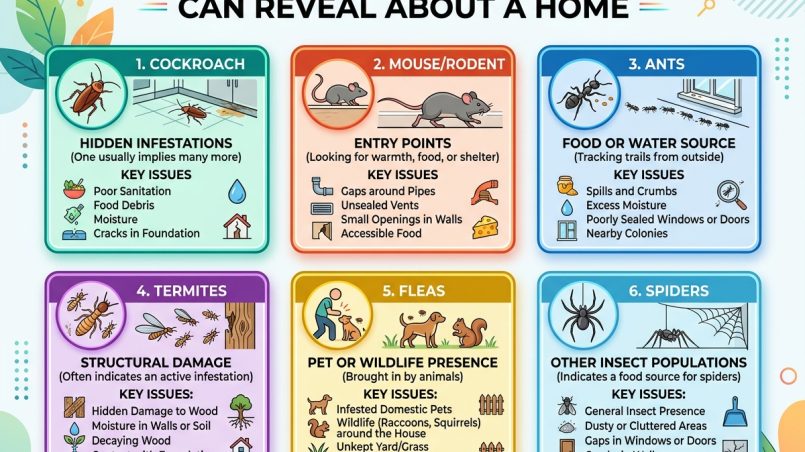
Ants often indicate a food source, a moisture issue, or an opening around windows and doors. One ant may be scouting, but a visible trail suggests a route between a nest and food. Avoid wiping out the entire trail before noting where it begins and ends.
Cockroaches
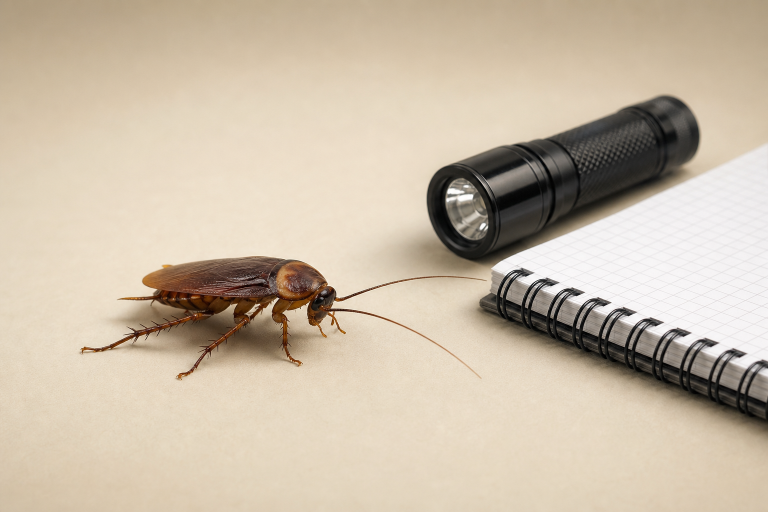
Identification matters. A large roach that enters near an exterior door can be an outdoor visitor, while repeated small roaches in kitchens or bathrooms can signal nearby harborages. Check for pepper-like droppings, egg cases, stale odors, and activity beneath sinks or appliances.
Rodents
Mice and rats commonly leave evidence before they are seen. Look for droppings, scratching sounds, chewed food packaging, nesting material, and rub marks along walls. The CDC advises homeowners to inspect gaps around pipes, doors, vents, foundations, attics, and crawl spaces because rodents can enter through surprisingly small openings.
Termites
Discarded wings, mud tubes, hollow-sounding wood, blistered surfaces, and fine wood-like debris deserve prompt attention. Termites can remain concealed for long periods, so structural clues are more important than waiting for repeated sightings.
Spiders and Wasps
Spiders can indicate a supply of other insects nearby, particularly around exterior lights, garages, and storage areas. Wasps may indicate a nest in a soffit, wall void, attic, or shrub. Do not block an active nest opening or use a ladder near stinging insects without proper precautions.
Where To Inspect First
- Kitchen: Look under sinks, behind appliances, inside lower cabinets, and around food storage.
- Bathrooms: Check plumbing penetrations, vents, drains, baseboards, and areas with condensation.
- Basement or crawl space: Look for moisture, droppings, webs, damaged wood, and foundation gaps.
- Attic: Inspect insulation, rooflines, vents, and stored materials for nesting or entry signs.
- Garage and exterior: Check door sweeps, boxes, firewood, screens, utility lines, standing water, and vegetation touching the structure.
A flashlight, gloves, a phone camera, and a simple written log are usually enough. Record the date, room, weather, pest description, and evidence found. That information is useful if the activity continues.
What To Do in the First 24 Hours
- Observe safely: Note the pest’s size, color, behavior, and direction of travel.
- Take photos: Capture both a close image and a wider shot of the surrounding area.
- Inspect nearby conditions: Check cracks, plumbing, food containers, baseboards, and clutter without disturbing a possible nest.
- Monitor: Place non-toxic monitors along walls or suspected travel routes, rather than in the middle of a room.
- Reassess: New sightings or fresh evidence should change the response from observation to targeted action.
Common Mistakes To Avoid
- Spraying before identifying the pest or locating its likely route.
- Cleaning away droppings, wings, or frass before taking photos.
- Ignoring leaks, condensation, and other moisture sources.
- Sealing one opening without checking for nearby entry points.
- Using more pesticide than the label directs.
- Relying on memory instead of keeping a brief sighting log.
Simple Prevention Steps for 2026
Prevention works best as a routine. Store food and pet food in sealed containers, clean spills quickly, repair leaks, maintain door sweeps and screens, trim plants away from walls, and move cardboard, firewood, and clutter away from the foundation.
The EPA describes integrated pest management as an approach built around monitoring, identification, prevention, and targeted control. For homeowners, that means correcting the conditions pests need before reaching for a broad treatment.
When To Seek Professional Help
Request an inspection when sightings occur repeatedly, the same pest appears in multiple rooms, or you find fresh droppings, gnaw marks, shed wings, mud tubes, frass, or a nest in a difficult location. Prompt help is also sensible when pests may create health, stinging, or structural risks.
A quality inspection should identify the pest, review likely entry points, assess moisture and sanitation conditions, document findings, and explain practical next steps.
Frequently Asked Questions
Should a homeowner worry about one pest?
One pest may be an isolated visitor, but the species and evidence nearby matter. A short inspection is more useful than guessing.
How long should a homeowner monitor after one sighting?
Monitor the room and nearby entry points for several days. Repeat activity, droppings, or damage suggests the issue needs more attention.
Can a clean home still have pest problems?
Yes. Pests can enter through small gaps, roof damage, plumbing openings, packages, neighboring units, landscaping, or stored materials. Cleanliness helps reduce attractants, but it cannot eliminate every route indoors.
Conclusion
One pest sighting is a reason to pay attention, not a reason to panic. Observe, document, inspect, monitor, and correct the food, water, shelter, or access point that may be involved. That measured approach can reveal whether you encountered a temporary visitor or an early warning sign.