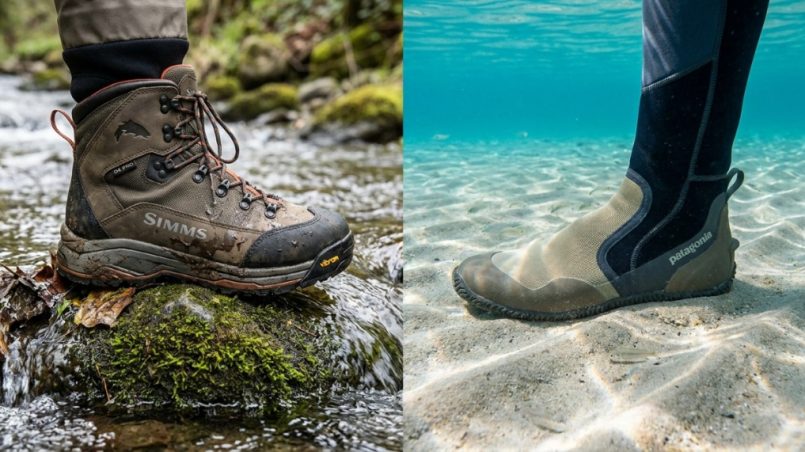
An angler who uses the same shoes for saltwater flats fishing and freshwater river wading is guaranteed to fail at one — because these environments attack footwear through opposite mechanisms that require opposing design solutions. Deciding between saltwater fishing shoes and freshwater fishing shoes depends on which environment dominates your fishing calendar — and understanding why a shoe perfect for one will deteriorate rapidly or perform dangerously in the other.
Saltwater fishing shoes are designed to resist corrosion, drain rapidly, grip smooth fiberglass decks, and withstand the destructive chemistry of ocean saltwater. Freshwater fishing shoes prioritize terrain traction, ankle stability, moderate waterproofing, and durability against rocks, mud, and organic debris. The fundamental conflict? Saltwater demands drainage and corrosion resistance. Freshwater demands waterproofing and terrain grip. These are opposing engineering priorities — and choosing wrong costs you either destroyed shoes or dangerous traction failure depending on which environment you mismatch.
How Does Saltwater Destroy Fishing Shoes Differently Than Freshwater?
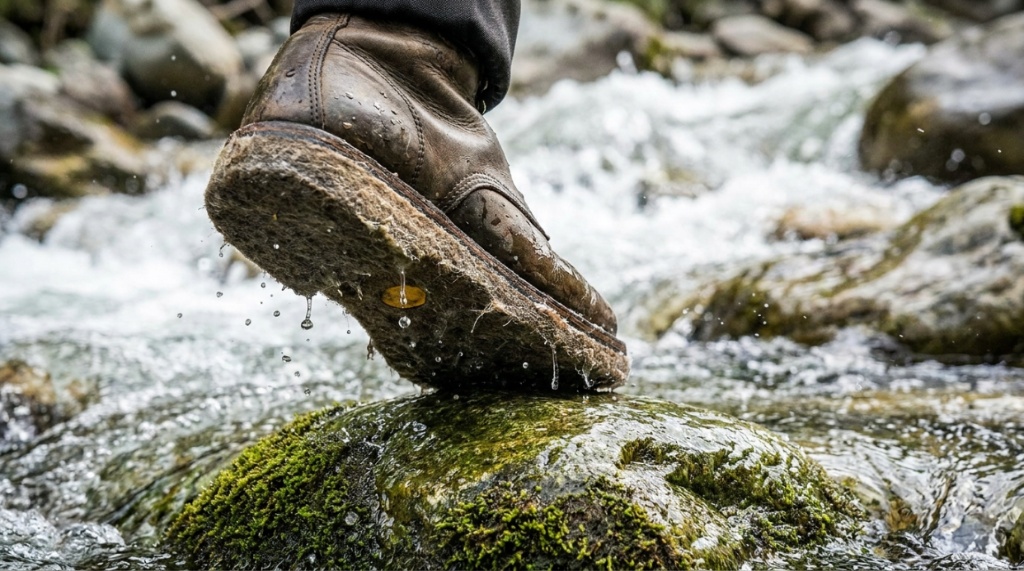
Saltwater destroys shoes through chemical corrosion of metals, crystalline abrasion of fabric fibers, adhesive breakdown of bonded construction, and bacterial growth in warm brine-soaked materials — while freshwater causes primarily mechanical wear from terrain contact and saturation-related material softening.
Destruction mechanisms compared:
| Damage Type | Saltwater Effect | Freshwater Effect |
|---|---|---|
| Metal corrosion | Severe — eyelets, rivets, zippers corrode within weeks without maintenance | Minimal — no significant corrosive action on hardware |
| Fabric degradation | Salt crystals act as micro-abrasives when dry, cutting fibers | Water softens fibers temporarily but causes no chemical damage |
| Adhesive failure | Salt solution weakens glue bonds over time — soles delaminate | Occasional saturation may soften adhesives, but significantly slower degradation |
| Bacterial/mold growth | Warm saltwater creates aggressive bacterial environment in trapped moisture | Moderate risk, primarily when shoes stored wet in warm conditions |
| UV damage | High — offshore fishing exposes shoes to reflected UV from water surface (doubled exposure) | Moderate — shore fishing provides less reflected UV |
| Sole wear | Minimal mechanical wear (smooth boat decks) | Aggressive — rocks, gravel, and rough terrain abrade outsoles rapidly |
| Physical abrasion | Low (smooth surfaces) | High — river rocks, roots, and debris create constant surface contact |
This is why shoes designed for one environment fail in the other. Saltwater shoes use corrosion-proof materials (no metal, sealed synthetic construction) that lack the ruggedness for rocky terrain. Freshwater shoes use durable metal hardware and thick leather that saltwater destroys within weeks of exposure.
What Are the Key Design Differences Between Saltwater and Freshwater Fishing Shoes?
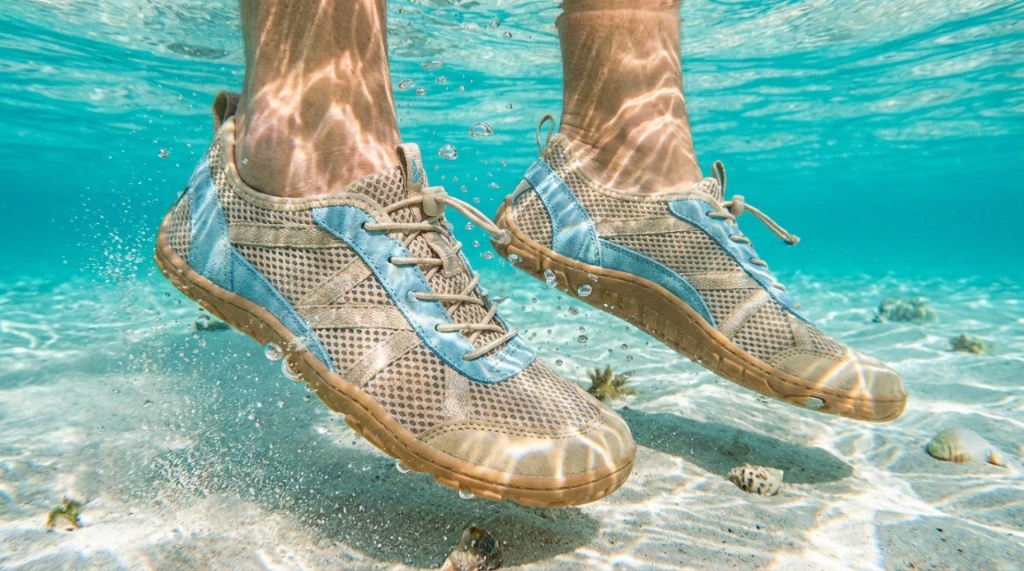
Saltwater shoes prioritize non-marking flat soles, maximum drainage, corrosion-proof synthetic materials, and lightweight quick-drying construction — while freshwater shoes prioritize lugged soles, waterproof membranes, durable leather or heavy nylon, and structured ankle support.
Feature-by-feature comparison:
- Outsole design:
- Saltwater: Flat, heavily siped, non-marking rubber. Designed for smooth fiberglass boat decks. No lugs (they catch on deck hardware and provide no benefit on smooth surfaces).
- Freshwater: Deep lugs, multi-terrain tread patterns. Designed for grip on mud, wet rock, gravel, and slippery organic surfaces (moss, algae).
- Water management:
- Saltwater: Drainage-first approach. Water enters freely and exits through ports/mesh. Shoes designed to be wet and dry rapidly.
- Freshwater: Waterproof-first approach. Membranes prevent water entry. Shoes designed to keep feet dry as long as possible.
- Upper construction:
- Saltwater: Lightweight synthetic mesh or rubber. No metal components. UV-resistant, salt-corrosion-proof. Focus on breathability and quick drying.
- Freshwater: Heavy-duty nylon, leather, or neoprene. Metal hardware acceptable (no corrosion risk). Focus on durability and protection against terrain impact.
- Ankle support:
- Saltwater: Minimal — low-cut designs dominate for freedom of movement on flat decks. Ankle support unnecessary on level boat surfaces.
- Freshwater: Often high-cut or mid-cut for ankle stability on uneven terrain. River current resistance requires ankle support to prevent rolling.
- Weight:
- Saltwater: Ultra-light (8–16 oz per shoe). Long standing days require minimal weight to prevent fatigue.
- Freshwater: Heavier (16–32 oz per shoe). Durability and protection materials add weight that terrain stability benefits from.
Can One Shoe Work for Both Saltwater and Freshwater?
A single shoe can work for both environments only if you fish exclusively from boats in both settings — in which case a non-marking siped deck shoe with corrosion-proof construction serves adequately. For mixed boat-and-bank fishing across both waters, no single shoe performs optimally.
Situations where one shoe might work:
- You fish strictly from boats (bass boats on freshwater lakes + saltwater center consoles) and never wade or bank fish. Deck shoe grip needs are identical regardless of water salinity.
- You fish warm freshwater environments from shore without significant terrain challenges — flat, sandy banks or maintained fishing piers. A drainage shoe works here similarly to saltwater applications.
Situations where separate shoes are necessary:
- You wade freshwater rivers/streams (requires wading boots with ankle support and felt/studded soles) AND fish saltwater from boats (requires flat deck shoes with drainage)
- You bank fish rocky freshwater terrain (requires lugged outsoles) AND fish saltwater boats (requires flat non-marking soles)
- You fish cold freshwater (requires waterproof insulation) AND warm saltwater (requires drainage and breathability)
Forced compromise comparison: using a saltwater shoe in freshwater terrain risks ankle injury from lack of support and poor traction on rocks. Using a freshwater shoe in saltwater risks rapid corrosion destruction of metal hardware and inadequate deck grip from lugged soles. The danger of freshwater shoes on boat decks makes this the more hazardous mismatch — a slip on a boat deck is more immediately dangerous than a slip on a riverbank.
Which Should You Buy First If You Fish Both?
Buy saltwater shoes first if you fish from boats in either environment — boat safety takes priority over terrain performance. Buy freshwater wading boots first if you primarily wade rivers and streams — the ankle injury risk of wading without proper support outweighs boat deck concerns.
Decision priority framework:
- Priority 1 — Safety: Which fishing activity presents greater injury risk from wrong footwear? Boat deck slips (often resulting in serious injury from falling onto equipment or overboard) typically outweigh riverbank slips in severity. If you boat fish at all, non-slip deck shoes are your first purchase.
- Priority 2 — Frequency: Which environment do you fish more often? If you fish saltwater 30 times per year and freshwater 5 times, saltwater shoes justify investment first. The reverse applies for freshwater-dominant anglers.
- Priority 3 — Budget allocation: If buying one pair now and one pair later, allocate 60% of budget to your primary environment and 40% to secondary. Quality in your main application matters more than equal spending across both.
Budget compromise if buying only one pair: a synthetic drainage deck shoe with non-marking siped soles works acceptably for boat fishing in both environments and casual bank fishing on flat terrain. It won’t work for wading or rough terrain — but it covers the widest range of casual multi-environment fishing with acceptable (not optimal) performance.
How Do Environmental Conditions Affect Your Choice?
Temperature, terrain type, trip duration, and regional hazards (oysters, coral, slippery algae) override the simple saltwater/freshwater distinction — because conditions within each water type vary more than conditions between them.
Condition-driven decision matrix:
- Warm saltwater + boat = Lightweight drainage deck shoe (Shimano Evair, Grundéns Sea Knit)
- Cold saltwater + boat = Insulated rubber deck boot (XTRATUF Legacy, Grundéns Boundary)
- Warm saltwater + wading = Thick-soled booties with closed toe (oyster/coral protection)
- Warm freshwater + boat = Drainage deck shoe (same as saltwater boat option — corrosion less critical but grip identical)
- Cold freshwater + wading = Insulated wading boot with felt or studded sole (Simms, Korkers)
- Cold freshwater + bank = Waterproof hiking/fishing boot with lugged sole (Danner, Keen)
- Warm freshwater + bank = Water-resistant trail shoe or drainage sandal
Notice: the boat fishing shoes are nearly identical across water types (grip is grip regardless of salinity). The differentiation intensifies for wading and bank fishing — where terrain and temperature create genuinely different demands between environments.
How Should You Maintain Shoes Used in Different Water Types?
Shoes used in saltwater require aggressive fresh-water rinsing after every trip (non-negotiable), while freshwater shoes need thorough drying and occasional waterproofing retreatment — with both types needing proper ventilated storage between uses.
Maintenance protocols by water type:
- After every saltwater trip:
- Rinse entire shoe thoroughly with fresh water (garden hose, outdoor faucet)
- Pay special attention to outsole channels, drainage ports, and seam areas where salt concentrates
- Remove insoles to rinse separately
- Air dry in shade — never sealed containers or direct sun
- Store with ventilation — never in closed boat compartments or sealed bags between trips
- After freshwater trips:
- Remove mud and debris from outsole lugs (compressed mud hardens and reduces future grip)
- If waterproof: air dry completely before storing (trapped moisture degrades membranes)
- If quick-dry: remove insoles, air dry in ventilated area
- Quarterly: re-apply DWR treatment to waterproof shoes, condition leather if applicable
- For shoes used in both:
- Always rinse with fresh water regardless of fishing environment (salt residue from prior trips activates with any moisture)
- Maintain the more demanding protocol (saltwater rinse) as your standard — it protects against both environments
Conclusion
The saltwater vs. freshwater fishing shoe decision isn’t about water type alone — it’s about the complete environmental profile of how and where you fish. Boat anglers in either environment need flat, siped, non-marking deck shoes. Wading anglers in either environment need supportive boots with terrain-appropriate soles. The water’s salinity determines material requirements (corrosion resistance vs. waterproofing), while the fishing surface determines sole requirements (smooth deck grip vs. terrain traction).
If you fish both environments regularly, owning separate shoes isn’t extravagant — it’s the only approach that provides both safety and longevity. A deck shoe for all boat fishing (salt or fresh) and a wading/bank boot for all terrain fishing (salt or fresh) covers every scenario with optimal performance. Choose based on your actual fishing activities, maintain according to environment-specific protocols, and your footwear will perform reliably across every trip regardless of water type.
Frequently Asked Questions
Will saltwater ruin my freshwater fishing shoes?
Yes — if they contain metal hardware (eyelets, rivets, buckles), salt will corrode these components within weeks of repeated exposure without thorough rinsing. Leather components will dry, crack, and degrade from salt crystal formation in fibers. If your freshwater shoes are all-synthetic with no metal, they’ll survive saltwater with proper rinsing — but their lugged soles may still be inappropriate for boat decks.
Can I use wading boots on a boat?
Wading boots with felt soles should never be used on boat decks — felt creates minimal grip on fiberglass and can transfer invasive aquatic species between waterways. Rubber-soled wading boots are safer on boats but their aggressive lugs can damage deck surfaces and create an uneven standing platform on flat surfaces. Dedicated deck shoes are always preferred for boat fishing.
What’s the best all-around shoe if I only buy one pair?
A synthetic non-marking deck shoe with siped flat sole, drainage ports, and no metal hardware covers the widest range — all boat fishing (salt and fresh), casual bank fishing on flat terrain, and warm-water shore activities. It won’t handle cold water, rough terrain, or wading — but for boat-dominant anglers who occasionally fish from easy banks, it’s the best single-pair compromise.
How long do saltwater fishing shoes last compared to freshwater shoes?
Saltwater shoes typically last 12–18 months of regular use due to corrosive environment acceleration. Freshwater shoes last 18–36 months because they face mechanical wear (slower degradation) rather than chemical attack. Both lifespan estimates assume proper maintenance. Neglecting post-trip saltwater rinsing can reduce saltwater shoe lifespan to under 6 months.
Do I need fishing shoes for kayak fishing?
Yes — kayak fishing involves launching from varied terrain (mud, sand, rocks), sitting in water-exposed cockpits, and occasionally wading to land fish. Lightweight drainage shoes or neoprene booties work best — they provide protection during launch/landing, comfort during paddling, and appropriate grip without the weight of full fishing boots. Bare feet risk cuts, stings, and burns from hot kayak surfaces.
If you want to stay out on the water longer without discomfort, choosing the right footwear is only half the battle. Your upper body takes a beating too, which is why learning how to reduce wrist fatigue while fishing is essential for maintaining your casting accuracy during long days on the water. Proper ergonomics—from the way you grip your rod to matching your shoes to your environment—ensures your entire body stays supported, preventing soreness from cutting your trip short.
Are expensive fishing shoes actually better for each environment?
For boat deck safety (saltwater), yes — premium rubber compounds and siping technology from $80+ shoes provide measurably better grip than budget alternatives. For terrain fishing (freshwater), the value threshold is lower — a $60–$100 waterproof boot provides adequate performance for most recreational bank and wade fishing. Premium ($150+) freshwater boots justify cost primarily for guides and daily anglers who need maximum durability and comfort across hundreds of fishing days.