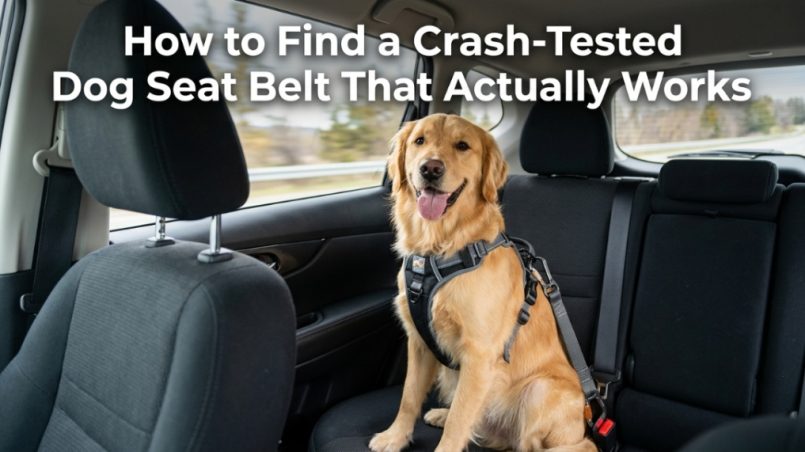
Most dog owners assume any pet harness clipped into a seat belt buckle will keep their dog safe in a crash — but crash-test data tells a completely different story. A crash-tested dog seat belt is a restraint system that has been independently evaluated using standardized automotive impact protocols, designed to keep your dog secured and prevent them from becoming a dangerous projectile during a collision. The problem is that the pet safety product market is flooded with harnesses labeled “safety” that have never passed a single crash simulation. A 30 mph impact can turn an unrestrained 60-pound dog into a 2,700-pound force of impact — enough to kill a passenger. If you’re searching for reliable pet transportation safety solutions in your area, understanding what “crash-tested” actually means — and which products back up that claim — is the single most important step you can take before your next trip with your dog.
What Does “Crash-Tested” Actually Mean for a Dog Seat Belt?
A crash-tested dog seat belt or harness has been physically subjected to simulated vehicle collision forces — typically at 30 mph — using dummy loads and sled-test rigs, with results independently verified by a third-party lab or automotive safety organization.
Not every product that uses the word “crash-tested” on its packaging meets the same standard. There is currently no federally mandated safety rating for pet restraints in the United States. That vacuum has been filled by two primary independent testing bodies:
- Center for Pet Safety (CPS) — a nonprofit research organization that conducts sled crash-simulation tests using dog surrogate dummies. Their protocols mirror automotive child restraint standards.
- MGA Research Corporation — an accredited automotive safety testing lab that some manufacturers contract independently to validate their products.
When a product claims CPS certification, it means it passed a 30 mph deceleration test without the surrogate escaping or the harness hardware failing catastrophically. That is the baseline you should look for — not marketing copy, not customer reviews, not star ratings.
The broader category of pet transportation safety includes carriers, crates, and booster seats, but harnesses that interface with a vehicle’s existing seat belt system are the most common and most misunderstood segment.
Why Do Most “Safety” Dog Harnesses Fail Crash Tests?
The majority of pet harnesses marketed as “safety” products fail crash tests because they are built around walking and restraint comfort — not vehicle collision dynamics. The engineering requirements are completely different.
When the Center for Pet Safety conducted its landmark study, they tested ten of the most popular dog harnesses on the market. Only one — the Sleepypod Clickit Utility — passed without the surrogate escaping. That is a 90% failure rate among top-selling products.
Here is why most fail:
- Weak strap webbing: Standard nylon webbing used in walking harnesses is not rated for high-tensile sudden-impact loads.
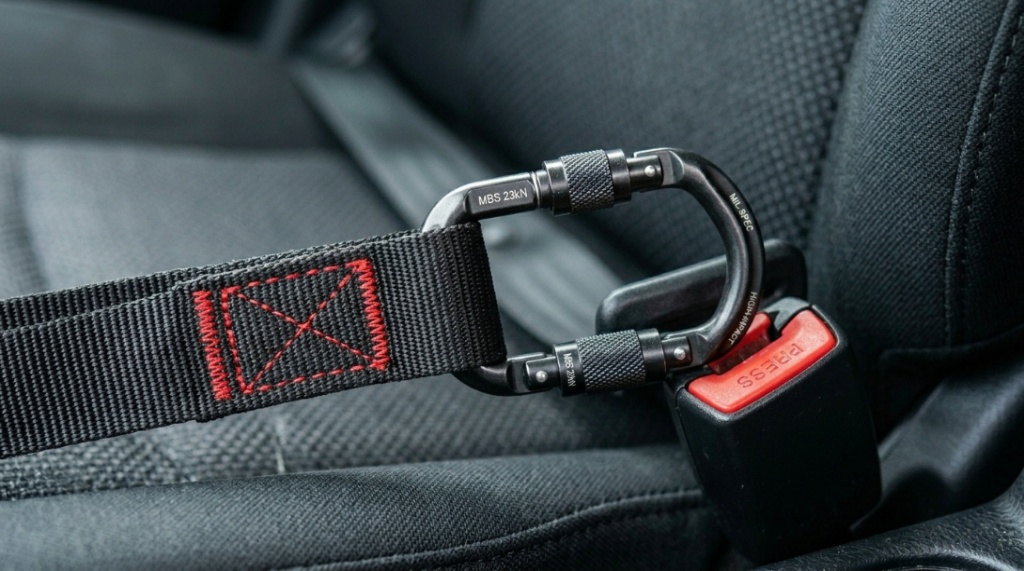
- Inadequate hardware: Plastic buckles and D-rings can shatter or deform at crash forces.
- Poor force distribution: Harnesses that concentrate load on a single attachment point can cause internal injury even when the dog doesn’t escape.
- No vehicle anchor point integration: Many harnesses attach to a seat belt tongue rather than to an ISOFIX or latch anchor, which creates a longer force arc during impact.
This is not just a dog safety issue. An unrestrained pet in the cabin is a documented human fatality risk. The American Automobile Association (AAA) has reported that 65% of dog owners admit to being distracted by their pets while driving.
Which Dog Seat Belts Have Actually Passed Crash Tests?
As of the most recent Center for Pet Safety evaluations, a small number of harnesses and restraint systems have earned passing marks. The Sleepypod Clickit Utility and the Sleepypod Clickit Sport are the most widely cited CPS-certified harnesses currently available for consumer purchase.
Here is a comparison of the leading crash-tested and independently evaluated dog restraint products:
| Product | Crash Test Standard | Restraint Type | Best For | Weight Range |
|---|---|---|---|---|
| Sleepypod Clickit Utility | CPS Certified (30 mph) | Harness + seat belt loop | Medium to large dogs | 18–90 lbs |
| Sleepypod Clickit Sport | CPS Certified (30 mph) | Harness + seat belt loop | Everyday travel, active dogs | 18–90 lbs |
| Ruffwear Load Up Harness | MGA Research tested | Harness + seat belt tether | Active breeds, trucks/SUVs | 13–120 lbs |
| Kurgo Tru-Fit Smart Harness | Internal crash simulation | Harness + seat belt loop | Budget-conscious buyers | 5–75 lbs |
| Gunner Kennel G1 Intermediate | CRATED: 5-star MGA rated | Rear-anchored crate | Frequent travelers, large dogs | Up to 75 lbs |
Important note: Always verify current certification status directly with the manufacturer or the Center for Pet Safety website before purchasing. Product lines update and certifications can lapse or be revised.
How Do You Properly Fit a Crash-Tested Dog Harness?
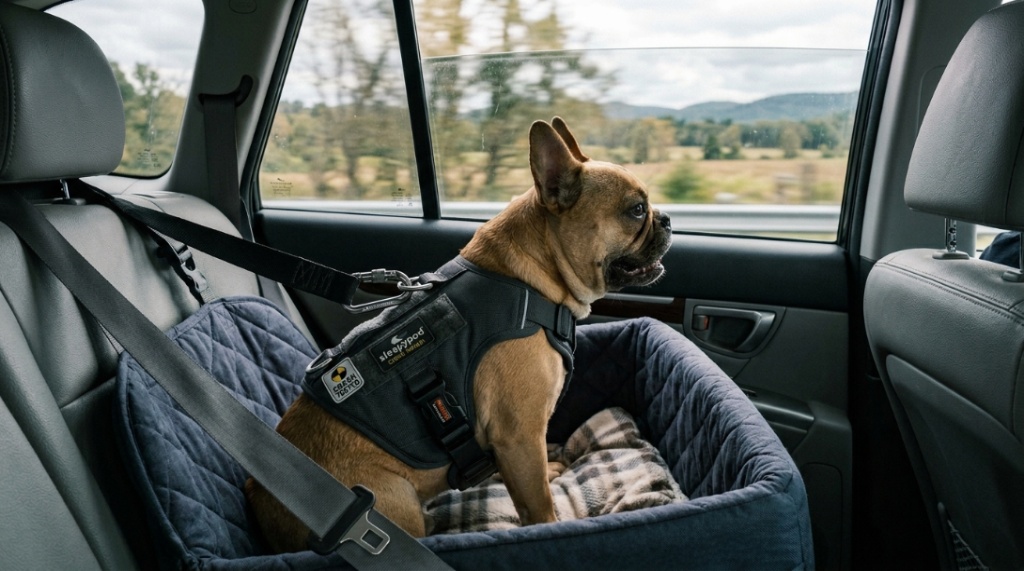
A crash-tested harness only performs as designed when it fits correctly. An improperly fitted harness can fail even if the product itself passed certification testing.
Follow these fitting steps:
- Measure your dog’s girth — the widest point around the chest, just behind the front legs. This is the primary sizing dimension for most safety harnesses.
- Check the manufacturer’s sizing chart — do not estimate. A harness that is one size too large will allow the dog to slip through during impact.
- The two-finger rule: You should be able to slide two fingers under any strap. Tighter risks injury. Looser risks escape.
- Verify the vehicle connection point: Most certified harnesses route through the vehicle’s seat belt. Confirm the routing path matches the product instructions exactly.
- Test fit before the road: Have your dog sit, stand, and shift weight in the harness while stationary. Look for any strap migration or buckle stress.
Fit issues are the most common reason a correctly purchased crash-tested product still fails to protect in a real-world scenario. Take the fitting process as seriously as you take the purchase itself.
Is a Dog Crate Safer Than a Harness in a Vehicle Crash?
A properly anchored, crash-rated dog crate can offer superior protection compared to a harness, particularly for large or extra-large breeds where harness engineering faces greater load challenges. However, crate safety depends entirely on how the crate is secured to the vehicle.
A crate sitting loose in a cargo area is arguably more dangerous than no restraint at all — it becomes a heavy projectile on its own. The Gunner Kennel G1 has achieved a 5-star crash rating from MGA Research, making it one of the most rigorously tested pet containment options on the market.
For most dog owners driving standard sedans or crossovers, a CPS-certified harness is more practical. Crates work best in SUVs, wagons, and pickup trucks where they can be anchored using the cargo tie-down system or ISOFIX/latch anchors.
The choice between crate and harness should factor in:
- Vehicle type and available anchor points
- Dog size and temperament
- Trip duration and frequency
- Budget (certified crates typically cost more than harnesses)
What Are the Legal Requirements for Transporting Dogs in a Vehicle?
Pet transportation laws vary significantly by state and country. In the United States, there is no federal law requiring dogs to be restrained in vehicles, but several states have specific regulations.
New Jersey, for example, has one of the more explicit frameworks — the state’s animal cruelty statutes can apply to dogs transported in ways that endanger them, and law enforcement has discretion to cite drivers. If you travel with your dog in New Jersey or other regulated states, understanding the local requirements for safe pet travel in your state is both a legal and a safety concern.
Other notable state-level considerations:
- Hawaii: Prohibits dogs in laps while driving.
- Oregon: Dogs in open truck beds must be restrained.
- Connecticut: Fines for animals improperly confined during transport.
Beyond legal compliance, the ethical case for restraint is straightforward — a crash that injures your unrestrained dog is a preventable outcome.
How Much Should You Spend on a Crash-Tested Dog Seat Belt?
Genuine crash-tested dog harnesses typically cost between $60 and $120. If you see a harness labeled “safety” for $15–$25, it almost certainly has not been independently crash-tested to any meaningful standard.
The engineering, materials, and independent certification process required to produce a genuinely crash-safe product have real costs. Sleepypod’s CPS-certified harnesses retail around $80–$100. The Ruffwear Load Up sits in a similar range. These are reasonable prices for a product whose core function is preventing a potentially fatal outcome.
Consider the cost in context: the average emergency veterinary visit following a car accident costs $800–$2,500. The harness is not an extravagance — it is insurance with a one-time premium.
If budget is a constraint, prioritize harnesses that have at minimum been subjected to published third-party testing, even if not full CPS certification. Avoid any product where safety claims rest solely on the manufacturer’s own statements.
Prioritizing your pet’s vehicle safety doesn’t just protect them during sudden stops; it also ensures they remain securely inside the vehicle at all times. When you use proper restraints, you significantly or running away from an open car door during rest stops. Combining high-quality crash-tested gear with vigilant travel habits offers complete peace of mind on every journey.
The Bottom Line on Crash-Tested Dog Seat Belts
The pet safety product market has a transparency problem. Most harnesses sold as “safety” products have never been subjected to a real crash simulation. The result is that millions of dogs travel in restraints that provide a false sense of security while delivering little actual protection in the event of a collision.
Finding a crash-tested dog seat belt that actually works comes down to three things: looking for independent certification (primarily from the Center for Pet Safety or MGA Research), ensuring proper fit using the manufacturer’s sizing protocol, and confirming that the product’s vehicle attachment method matches your specific car’s restraint anchors.
The Sleepypod Clickit line currently stands as the most rigorously validated harness option for most dog owners. For larger breeds or frequent travelers, a crash-rated anchored crate deserves serious consideration.
Your dog can’t buckle up on their own. Have you checked whether your current setup would actually hold in a 30 mph crash? Share this article with another dog owner who travels with their pet — it might be the most important read they get this year. And if you want product-specific guidance for your location, explore trusted regional pet safety recommendations to find what’s right for your situation.
Frequently Asked Questions About Crash-Tested Dog Seat Belts
What is the difference between a crash-tested and a non-tested dog harness?
A crash-tested dog harness has been subjected to simulated collision forces — typically at 30 mph — using standardized sled-test protocols and dummy loads, with results verified by an independent laboratory. A non-tested harness has only been assessed for fit and walking function. In an actual vehicle collision, most non-tested harnesses fail to contain the dog or distribute impact force safely.
Is the Center for Pet Safety the only organization that crash-tests dog restraints?
No, but the Center for Pet Safety (CPS) is the most recognized nonprofit that tests pet restraints using protocols similar to child car seat standards. MGA Research Corporation is an accredited automotive testing lab that manufacturers can contract independently. Some international standards bodies in Europe also conduct pet restraint testing, though their protocols differ from U.S.-based evaluations.
Can I use a regular dog harness with a car seat belt adapter?
You can physically attach most harnesses to a seat belt adapter, but doing so does not make the harness crash-safe. A standard walking harness is not engineered to manage the tensile loads generated in a 30 mph collision. The attachment hardware, strap webbing, and load distribution points are built for walking restraint, not vehicle impact dynamics. Only harnesses specifically designed and tested for vehicle use should be used with car seat belt systems.
How do I know if my dog’s current harness is crash-tested?
Check the product’s official website or the packaging for explicit reference to third-party crash testing — specifically CPS certification or MGA Research testing. If the only claims are vague terms like “safety harness” or “travel approved” without naming a testing body and methodology, the product almost certainly has not been independently crash-tested. You can also search the Center for Pet Safety’s website for their published list of certified products.
Are crash-tested dog seat belts suitable for all dog breeds and sizes?
Most certified harnesses cover a weight range from roughly 5 to 90 pounds, with some variation by product. Very small dogs (under 5 lbs) and very large dogs (over 100 lbs) have fewer tested options. For giant breeds, a crash-rated anchored crate is often the more practical solution. Always verify that your dog’s specific weight and chest girth fall within the manufacturer’s tested size range — using a harness outside its rated parameters can compromise safety even for a certified product.
Does a crash-tested harness also work as a walking harness?
Some crash-tested harnesses double as walking harnesses, but not all. The Sleepypod Clickit Utility, for example, is designed primarily as a vehicle restraint and is less optimized for leash walking. The Ruffwear Load Up is generally more comfortable for dual use. Check the product specifications — using a vehicle-only harness for daily walks may cause premature wear on components critical to crash performance.
What should I do if my dog is anxious and refuses to wear a safety harness?
Gradual desensitization is the most effective approach. Introduce the harness at home without any vehicle association — let your dog sniff it, drape it over them without fastening, and reward calm behavior with treats. Slowly build up to full fitting over several sessions before introducing the vehicle environment. If anxiety is severe, a certified crash-rated crate may be a better option, as some dogs tolerate enclosed spaces more readily than body-contact harnesses.