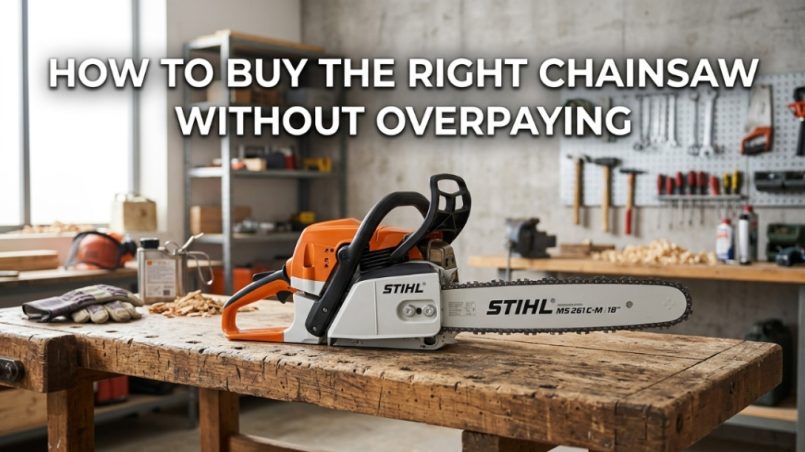
Most first-time chainsaw buyers waste money by purchasing far more machine than they actually need. The fastest way to avoid that mistake is to match the chainsaw to your real workload, compare features carefully, and study trustworthy chainsaw reviews before spending your money. A homeowner trimming branches a few weekends each month needs a very different tool than a professional arborist. Yet many buyers end up paying hundreds of dollars extra for power, bar length, and features they rarely use.
A chainsaw is a portable cutting tool that uses a motor-driven chain with sharp teeth to cut wood. Choosing the right one means balancing power, safety, maintenance, weight, and price without paying for capabilities you do not need.
Why Do Beginners Often Overpay for Chainsaws?
Many beginners buy based on marketing claims rather than actual cutting requirements.
Manufacturers often highlight engine size, horsepower, and bar length. These specifications can be useful, but they do not automatically make a chainsaw better for every user. A larger chainsaw costs more, weighs more, consumes more fuel, and can be harder to control.
What Type of Chainsaw Is Best for Your Needs?
The best chainsaw depends on how often you use it and what type of wood you cut.
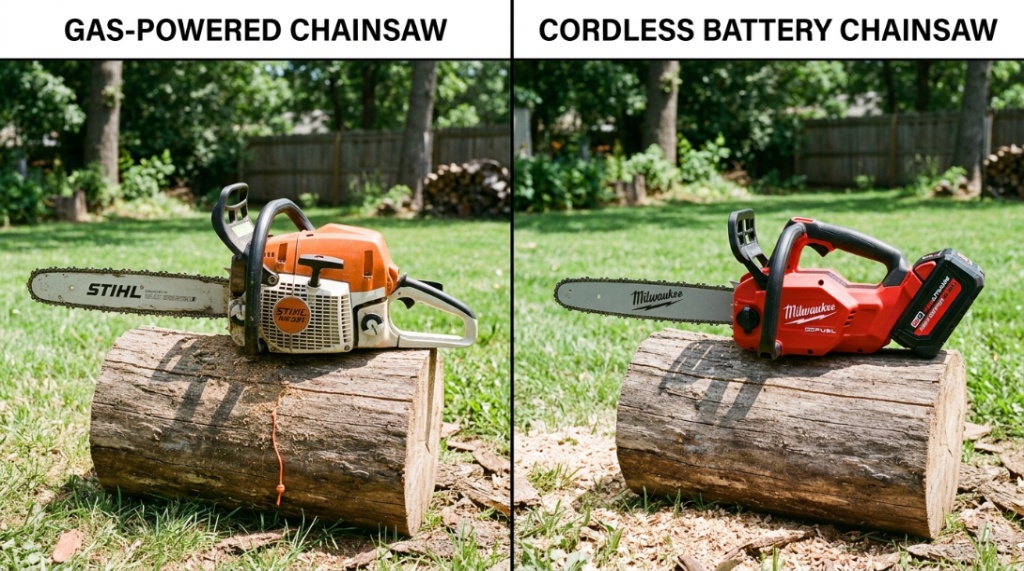
Should You Buy a Gas Chainsaw?
Gas chainsaws provide maximum power and unlimited runtime with refueling.
- Best for large trees
- Ideal for heavy-duty cutting
- Suitable for professionals
- Requires more maintenance
Are Battery Chainsaws Worth Buying?
Modern battery-powered chainsaws are excellent for most homeowners.
- Easy startup
- Low maintenance
- Quiet operation
- No fuel mixing required
What About Corded Electric Chainsaws?
Corded models are affordable and lightweight but require access to electricity.
What Chainsaw Bar Length Should You Choose?
Most homeowners are best served by a 14-inch to 16-inch guide bar.
| Bar Length | Recommended Use |
|---|---|
| 10-12 inches | Pruning and light trimming |
| 14-16 inches | General homeowner tasks |
| 18-20 inches | Medium tree cutting |
| 22+ inches | Professional forestry work |
How Much Power Do You Actually Need?
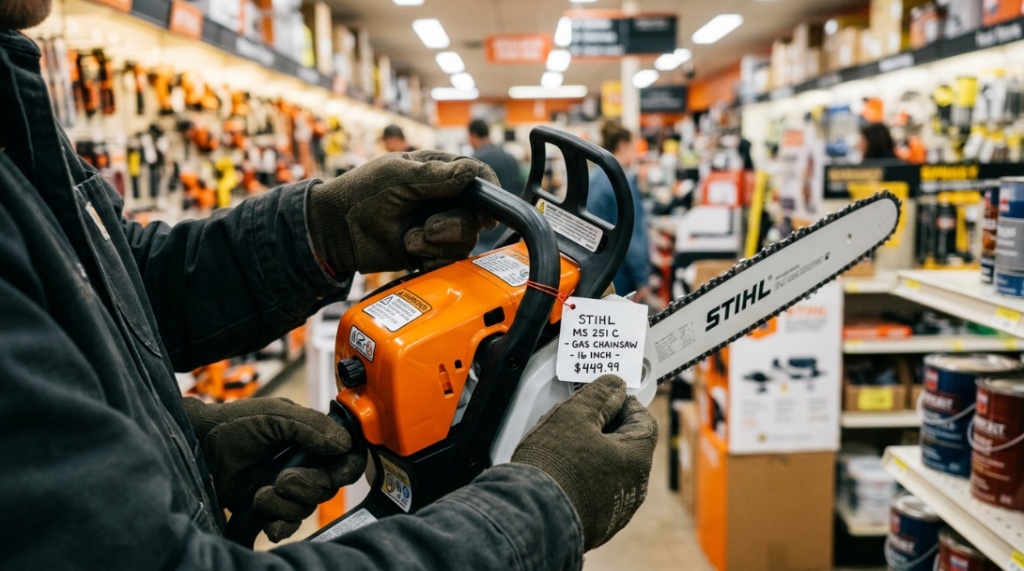
Most homeowners need significantly less power than they think.
If your typical tasks involve trimming branches, storm cleanup, and cutting firewood, a mid-range chainsaw is usually sufficient. Paying for excess power often increases cost without improving results.
Which Safety Features Matter Most?
A chain brake is one of the most important chainsaw safety features.
- Chain brake
- Low-kickback chain
- Chain catcher
- Throttle lock
- Automatic chain lubrication
- Anti-vibration technology
How Much Should You Spend on a Good Chainsaw?
Most buyers can find an excellent chainsaw between $150 and $400.
| Budget | Typical Buyer |
|---|---|
| Under $150 | Occasional user |
| $150-$300 | Most homeowners |
| $300-$600 | Frequent users |
| $600+ | Professionals |
Which Features Are Worth Paying Extra For?
Some features deliver real value while others mainly increase cost.
- Tool-free chain tensioning
- Automatic oiling
- Brushless motors
- Battery platform compatibility
- Anti-vibration systems
How Can Chainsaw Reviews Save You Money?
Independent reviews often reveal long-term durability, battery life, maintenance requirements, and real-world performance that specifications alone cannot show.
What Common Mistakes Should You Avoid?
- Buying the biggest model available
- Ignoring safety features
- Choosing based on price alone
- Skipping maintenance considerations
- Overlooking warranty coverage
Conclusion
The right chainsaw is not necessarily the most expensive model. It is the one that matches your workload, budget, and experience level. By focusing on practical needs, comparing features carefully, and reading trusted reviews, you can avoid overspending and buy a chainsaw that delivers years of reliable performance.
When building your ultimate DIY toolkit, finding the right balance between power and budget is essential. Just as learning how to buy the right chainsaw without overpaying ensures you don’t waste money on outdoor gear, choosing versatile indoor tools requires the same smart approach. For instance, pairing your heavy-duty landscaping gear with reliable Portable Cordless Drills for On-The-Go Repairs ensures you are completely equipped for both quick household fixes and major yard projects without breaking the bank.
FAQ
What size chainsaw is best for beginners?
A 14-inch to 16-inch chainsaw is ideal for most beginners.
Are battery chainsaws powerful enough?
Yes. Modern battery chainsaws can handle most homeowner cutting tasks.
How much should a homeowner spend?
Between $150 and $400 is sufficient for most residential users.
Is a gas chainsaw better than a battery model?
Gas models provide more power, while battery models offer convenience and lower maintenance.
What safety gear should be worn?
Wear eye protection, hearing protection, gloves, chainsaw chaps, and sturdy boots.