Houston’s average relative humidity sits near 74%, making it one of the most persistently humid cities in the entire United States. That relentless moisture in the air does far more damage to a loaf of bread than most home bakers ever realize. In fact, bakers across the Gulf Coast region report inconsistent crumb structure, sticky dough, and dense, gummy slices far more often than their counterparts in drier climates. Many Houston bakers who use bread machines also deal with a frustrating bread machine bread sinking problem that traces directly back to how ambient humidity affects yeast activity and gluten development. Understanding the science behind this connection is the first step toward baking consistently great bread in Houston’s challenging climate.
How Houston’s Climate Is Different from the Rest of the Country
Houston occupies a subtropical zone where warm Gulf air keeps humidity levels elevated throughout most of the year. Unlike cities in the Midwest or Northeast, Houston rarely experiences the kind of dry, cool air that naturally corrects baking conditions. Summer months push both heat and humidity to extremes that most bread recipes simply were not written to handle. Bakers in Denver or Chicago can follow a standard recipe with predictable results, but Houston bakers face a different physics problem entirely.
The city’s average summer temperature hovers between 90°F and 95°F, and humidity frequently reaches 80% or higher by mid-morning. These conditions affect every ingredient in a bread recipe before you even begin mixing. Flour absorbs atmospheric moisture overnight, yeast responds differently to warm, humid air, and gluten networks form under hydration levels far above what the recipe intended. For a deeper look at how regional food culture shapes what we eat and how we prepare it, exploring top foods to try in different regions can actually broaden your understanding of how environment and ingredient behavior are always connected.
Understanding Houston’s climate as a baking variable rather than a background detail changes how you approach every loaf. The moisture in the air is not a nuisance you work around occasionally. It is an active ingredient that behaves unpredictably if you ignore it. Treating humidity as a measurable baking factor gives Houston bakers a genuine advantage over those who follow recipes blindly.
The Science of Flour Hydration in Humid Conditions
How Flour Absorbs Moisture from the Air
Wheat flour contains hygroscopic starches and proteins that pull water molecules directly from the surrounding air. On a humid Houston morning, a bag of flour left on the counter for even two hours can absorb enough moisture to change its effective hydration level. This pre-absorbed moisture adds to the liquid you measure into the recipe, throwing off the flour-to-water ratio without any visible sign that anything has changed. The dough will feel softer, stickier, and harder to shape than you expect.
This effect is most pronounced with all-purpose and bread flour because of their higher protein content. Higher protein content means more gluten-forming sites, and each of those sites is also capable of binding with atmospheric water. Bread flour stored in an unconditioned Houston kitchen in July can carry 1% to 2% more moisture by weight than the same flour stored in a climate-controlled environment. That difference sounds small, but in a recipe calling for 500 grams of flour, it translates to an extra 5 to 10 grams of water that you never measured and never intended to add.
Why Over-Hydrated Dough Fails at the Texture Level
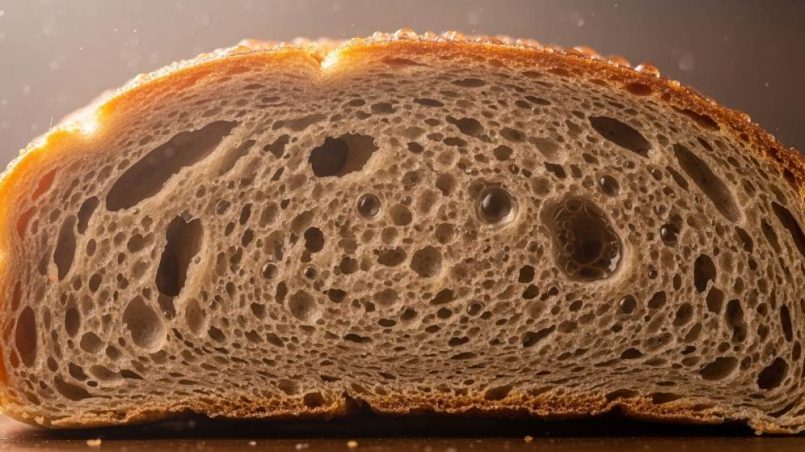
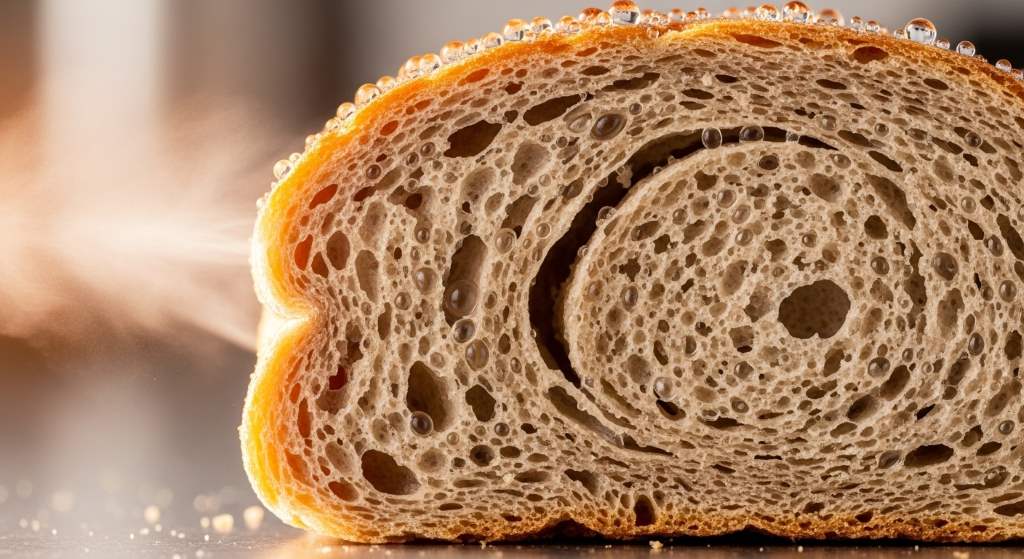
When dough contains more water than the recipe intended, the gluten network becomes too weak to trap carbon dioxide efficiently during fermentation. Carbon dioxide is what creates the airy, open crumb structure in a well-made loaf. Without a strong gluten network to hold those gas bubbles in place, they merge, collapse, or escape entirely before the loaf sets in the oven. The result is a dense, gummy interior with a crust that may look baked but conceals a raw-seeming center.
Over-hydrated dough also struggles during the shaping stage. The extra moisture makes the dough slack and unresponsive, meaning it spreads outward instead of holding an upward rise. Houston bakers often describe their loaves as “pancaking” on the pan, which is a direct consequence of excess hydration undermining gluten structure. Reducing your liquid by 5% to 10% on humid days is a straightforward fix that most recipe books never mention because they were not written with Houston’s climate in mind.
Yeast Behavior in Warm, Wet Environments
Why Warm Humidity Accelerates Fermentation Dangerously Fast
Yeast thrives in warm temperatures, and Houston’s climate essentially creates a perfect fermentation chamber outdoors. Active dry and instant yeast both become significantly more vigorous when ambient temperatures exceed 80°F. In a Houston kitchen without heavy air conditioning, your countertop proofing environment can sit at exactly the temperature range where yeast activity peaks and then overshoots. The dough rises faster than expected, runs out of fermentable sugars too early, and collapses before it reaches the oven.
Over-fermented dough has a distinctive texture problem that many bakers misdiagnose as an oven issue. The crumb becomes coarse and full of irregular, large holes surrounded by a dense, chewy matrix. The structure looks rustic but feels unpleasant because the gluten has been stretched past its elastic limit by too much gas production too quickly. Reducing yeast quantity by 10% to 25% during Houston summers is a practical adjustment that brings fermentation speed back within a controllable range.
The Unique Problem of Nighttime Humidity and Overnight Doughs
One discussion that almost no baking blog addresses is the specific challenge of overnight fermentation in Houston versus other cities. Many artisan recipes call for cold retarding the dough in the refrigerator overnight to develop flavor. In Houston, taking the dough out of the refrigerator the next morning means it immediately encounters warm, humid air that accelerates its final rise faster than any standard recipe anticipates. The transition shock between a cold dough and a 78°F, 80%-humidity kitchen is far more dramatic here than in a dry or temperate climate.
This rapid transition causes the outer surface of the dough to warm and proof faster than the center, creating uneven gas distribution throughout the loaf. Bakers who score their loaves before baking may notice the cuts seal shut quickly rather than opening into the dramatic ears that photos in recipe books show. Allowing refrigerated dough to rest on the counter in a sealed container for just 20 minutes before scoring and baking gives the internal temperature a chance to equalize and produces a more predictable oven spring.
Gluten Development Challenges Specific to Houston Bakers
How Humidity Interferes with Gluten Network Formation
Gluten forms when glutenin and gliadin proteins in flour hydrate and align into stretchy, elastic chains through mixing and kneading. In high humidity, this process starts prematurely because the flour has already absorbed moisture before mixing begins. Partially pre-hydrated flour proteins begin forming weak, disorganized bonds before you add any intentional liquid. The resulting gluten network is uneven, with some areas over-developed and others still loose, creating a crumb that tears unevenly and has inconsistent chew.
Houston bakers who add all their liquid at once often end up with shaggy, poorly cohesive dough because the flour’s hydration is already uneven. A technique called “bassinage,” which involves holding back about 5% of the recipe’s water and adding it gradually after initial mixing, helps correct this problem. This approach gives you real-time control over the dough’s final hydration without guesswork. It is a professional bakery technique that applies directly to Houston’s humidity-driven challenges.
Salt Timing as an Underrated Humidity Fix
Here is a genuinely uncommon but scientifically valid strategy that almost no home baking resource discusses in the context of humid climates: delaying salt addition by 5 to 10 minutes after the initial mix. Salt tightens gluten by pulling water away from protein chains and encouraging tighter bonding. In a normally hydrated dough, this tightening is welcome but not urgent. In a humidity-swollen Houston dough, adding salt early actually intensifies the problem because it tightens an already irregular gluten network before you have a chance to correct hydration.
By mixing flour and water first and allowing an autolyse rest of 20 to 30 minutes before adding salt, you give the gluten proteins time to hydrate and self-organize evenly. Once you add salt to this rested dough, the tightening effect works on a more uniform structure and produces better results. This technique pairs particularly well with the bassinage method mentioned above and gives Houston bakers two compounding tools to fight humidity-driven texture problems simultaneously.
Crust Problems Caused by Houston’s Ambient Moisture
A crisp, crackly crust is one of the most satisfying qualities in a well-baked loaf, and it is one of the first things Houston’s humidity destroys. Bread crust is essentially a dehydrated layer formed when high oven heat drives moisture out of the outermost dough. Once that loaf comes out of the oven and cools in a humid kitchen, the crust immediately begins reabsorbing moisture from the air. Within 30 minutes of cooling in an unventilated Houston kitchen, a crust that sounded hollow when tapped can become rubbery and soft.
Cooling bread on an elevated wire rack near an air conditioning vent is one of the most effective and underused solutions for this specific problem. The moving, cooler air creates a micro-environment around the loaf that slows moisture reabsorption long enough for the crust to fully set. Bakers who cool bread on solid surfaces or in warm corners of the kitchen lose their crust texture almost immediately after baking. Positioning matters more in Houston than in almost any other American city.
Sourdough bakers face an additional crust challenge because their loaves have a higher surface moisture content coming out of the oven due to the longer fermentation. A good diet built around whole, fermented foods supports overall well-being, and resources on foods that help your mental health often highlight sourdough’s fermented benefits, which makes mastering its crust in humid climates even more worthwhile. Baking sourdough in a Dutch oven and leaving it in the turned-off oven with the door cracked for 10 minutes after the bake helps the crust dry more completely before it meets humid kitchen air.
Practical Adjustments Every Houston Baker Should Make
Ingredient and Equipment Adjustments
- Store flour in an airtight container inside a climate-controlled room, not in a pantry or garage that heats up during the day.
- Reduce recipe liquid by 5% to 10% on days when humidity exceeds 70%, which in Houston means most of the year.
- Decrease yeast quantity by 10% to 25% during summer months to slow fermentation to a manageable pace.
- Use a kitchen thermometer to track dough temperature, targeting 75°F to 78°F regardless of room temperature.
- Add ice-cold water instead of room-temperature water during summer to compensate for heat absorbed through mixing friction.
- Weigh all ingredients by grams rather than using volume measurements, which are far less reliable when flour hydration varies.
Timing and Environment Adjustments
- Bake early in the morning before outdoor humidity rises and before kitchen temperatures climb from oven use.
- Run the kitchen air conditioner for at least 30 minutes before beginning any bread project to lower ambient humidity.
- Shorten bulk fermentation time by 15 to 20 minutes compared to recipe guidelines during summer months.
- Keep shaped loaves in the refrigerator for their final proof rather than proofing at room temperature.
- Cool finished loaves under a small fan or near an air conditioning vent to preserve crust texture.
The Houston Baker’s Humidity Toolkit: What to Buy
A digital hygrometer is the single most useful tool a Houston baker can own. These small, inexpensive devices display both temperature and relative humidity in real time, giving you concrete data to guide recipe adjustments rather than guessing based on how the weather feels. Hygrometers accurate to within 3% to 5% cost around $15 and pay for themselves after one saved loaf. Knowing that your kitchen reads 82% humidity at 9 AM tells you exactly how aggressively to reduce liquid and yeast for that day’s bake.
A probe thermometer with an instant-read display helps you track dough temperature throughout mixing and proofing, which is equally important in Houston’s heat. Most fermentation guidelines assume a dough temperature of 75°F to 78°F, but a Houston kitchen in summer can push dough temperatures well above 80°F even at the mixing stage. Knowing your dough’s actual temperature lets you compensate with cooler water, shorter fermentation times, or refrigerator proofing before the dough over-ferments and collapses.
Conclusion
Houston’s warm humidity is not a baking death sentence. It is a set of measurable variables that reward bakers who pay attention. By reducing hydration, adjusting yeast levels, controlling dough temperature, and using tools like hygrometers, any Houston baker can produce loaves with excellent crumb structure, good oven spring, and lasting crust texture.
The key is treating humidity as an ingredient rather than a complaint. If you are planning a bread-centered spread for any gathering, pairing your Houston-adapted loaves with thoughtfully chosen accompaniments from a resource like this galantine food banquet menu pairing guide can elevate the entire experience. Start tracking humidity in your kitchen today, make one adjustment at a time, and your baking will improve measurably within the very first week.
Frequently Asked Questions
Why does my bread dough feel stickier in Houston than when I bake in other cities?
Houston’s high humidity causes flour to absorb extra moisture from the air before mixing, which effectively over-hydrates your dough beyond what the recipe intended.
How much should I reduce liquid in a bread recipe on a humid Houston day?
Reduce your recipe’s liquid by 5% to 10% on days when humidity exceeds 70%, and weigh your ingredients in grams for the most precise control.
Can Houston humidity cause bread to collapse after rising?
Yes, because warm humidity accelerates yeast activity and leads to over-fermentation, which exhausts the gluten network and causes the loaf to collapse before or during baking.
Why does my bread crust go soft so quickly after baking in Houston?
The high ambient humidity causes the crust to reabsorb moisture within minutes of leaving the oven, so cooling near an air conditioning vent or fan is essential.
Is a bread machine more or less affected by Houston’s humidity than hand-baked bread?
Bread machines are equally affected because the flour they use still absorbs ambient moisture, so you should reduce liquid and yeast in machine recipes just as you would in hand-baked ones.