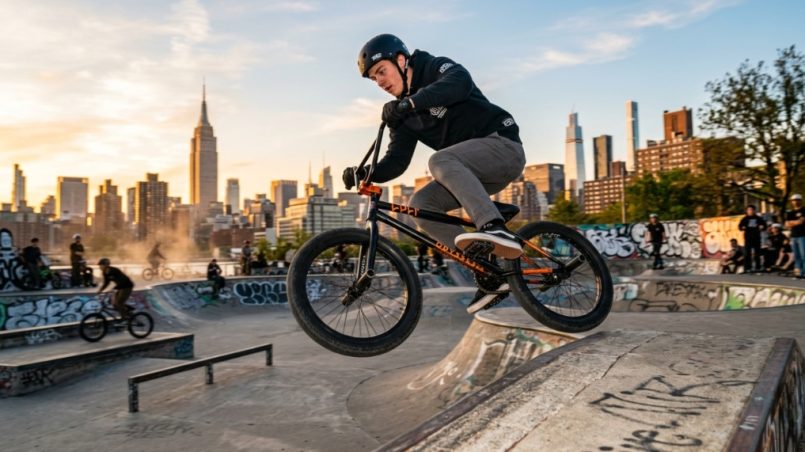
Riding in New York City is a different beast. Between the potholes, the constant stop-and-go traffic, and the unforgiving concrete, the parts on your bike take a serious beating. If you are in the market for a new set of pedals, you need something that can handle the abuse, offer solid grip in wet conditions, and fit your riding style—whether you are hitting the Brooklyn Banks or just using your BMX to weave through Manhattan traffic. The challenge is knowing exactly what to look for and, more importantly, where to buy them without getting stuck with overpriced, low-quality parts. This guide cuts through the noise to help you find top-rated BMX pedals NYC has to offer, focusing on what actually matters for local riders.
Key Takeaways
- Focus on material first: nylon pedals are budget-friendly and fine for casual riding, while aluminum or plastic composite pedals are better for the daily grind of NYC streets.
- Grip is non-negotiable. Look for replaceable pins or aggressive tread patterns to keep your feet planted in wet or slippery conditions.
- Supporting local NYC bike shops offers immediate warranty exchanges and expert advice that online retailers cannot match, especially for sizing and installation.
- Be wary of knock-off brands; sticking to reputable manufacturers ensures the bearings and axles can survive New York pavement.
Understanding What Makes a BMX Pedal “Top-Rated”
Before you hand over your cash, it helps to understand why certain pedals climb the ranks in the BMX community while others fall flat. A “top-rated” pedal is not about flashy colors or the lightest weight; it is about durability, grip, and serviceability. For NYC riders, the environment dictates the need for resilience.
Most high-end pedals fall into two camps: alloy (aluminum) and nylon/fiberglass composite. Alloy pedals, like the Odyssey Twisted PC’s metal counterparts, offer incredible longevity and a solid platform but can get slippery when wet. Composite pedals, on the other hand, are lighter, cheaper, and often offer better grip due to more aggressive pinning, but they might flex under extreme pressure or crack after a hard impact. The “best” choice depends on whether you are a street rider doing heavy grinds or a park rider who values foot retention.
Pedal Material and Durability
For the sheer abuse of NYC curbs and rails, aluminum pedals generally win on durability. They are less likely to shatter on impact. However, they are prone to bending axles if you are heavy on the cranks. Composite pedals, particularly those reinforced with fiberglass like the Odyssey Grandstand, offer a great middle ground—they are stiff, Grippy, and won’t destroy shins as badly as metal pins when you slip.
Serviceability and Bearings
Look for pedals with sealed bearings and, ideally, bushings. In a dusty, gritty city, sealed bearings keep the grit out of your rolling surface. Pedals with easily replaceable pins are a major plus. Once you grind down the pins in a season, you should be able to screw in new ones rather than buying a whole new set. This is a factor many riders overlook when buying locally, but it is crucial for cost-per-ride value.
Choosing the Right Pedal Type for Your Riding Style
Not all BMX pedals are created equal, and your specific discipline should dictate your purchase. If you spend your time exclusively in skateparks like Riverside, you have different needs than someone who is street riding in the Financial District.
Platform Size and Concavity
Street riders often prefer a larger platform (around 100mm x 100mm) to spread the impact force and provide a stable base for manuals and crank slides. Concavity—the dish-like curve of the pedal—helps lock your foot into the pedal, preventing it from slipping off the front or back during high-impact moves. Park riders might prefer flatter pedals for easier foot repositioning, while street riders want maximum concave for security.
Metal vs. Plastic Pins
Metal pins (often made of hardened steel or titanium) offer the ultimate grip but will shred your shins if you slip. Plastic pins, or integrated molded tread, are safer for beginners but wear down quickly. A hybrid approach—a composite body with metal pins—gives you the best of both worlds: durability, grip, and protection. Understanding this trade-off prevents you from buying a pedal that is too “aggressive” for your skill level.
How to Evaluate Pedal Grip and Safety
Grip is the number one safety feature on a pedal. The last thing you need on Canal Street is your foot slipping off the pedal while you are clipped into a busy lane. The tread pattern and pin height are the primary determinants of grip.
For wet weather riding, which is inevitable in NYC, look for pedals with a channel design that allows water and mud to escape. A flat, smooth pedal will act like a slip-and-slide in the rain. The best paddles for inclement weather feature deep recesses and sharp, tall pins. However, remember that more grip means less forgiveness. If you are adjusting your foot position mid-air in a park, super sharp pins can catch and cause awkward rotations.
Testing for Play
When you are in a shop, hold the pedal and try to wiggle the body against the spindle. There should be zero play or clunking. If you can feel a slight knock, the internal bearings or bushings are already loose. This is a common issue with cheaper pedals, and it leads to a wobbly platform that is unsafe at speed.
Where to Buy BMX Pedals in NYC: Local Shops vs. Big Box Stores
You have a few options when buying locally. Big box sporting goods stores often carry low-end BMX pedals, but these are usually generic items that will bend or break within a month. To get genuinely top-rated BMX pedals NYC riders trust, you need to visit a dedicated bike shop.
Local shops in Manhattan and Brooklyn carry the premium brands—Odyssey, Cult, Eclat, and Profile—and they usually stock the parts that are actually popular with local riders. Buying in person allows you to feel the pedal, check the weight, and verify the build quality. Furthermore, established shops have direct relationships with distributors. If you buy a set of pedals and the axle snaps two weeks later, returning to the shop is much easier than dealing with a cross-country shipping return for a warranty claim.
There is one significant downside to local shops: inventory. Small shops cannot stock every color or every model. If they don’t have the exact pedal you want in stock, they can usually order it, but check lead times. If you are in a rush, look for shops that specifically advertise “BMX specific” stock rather than general bike retailers.
Navigating the Used Market
Facebook Marketplace and Craigslist are popular in NYC for used BMX parts. While you can find deals on high-end pedals, you are also taking a risk. Used pedals often have worn pins and potentially bent axles that aren’t visible in photos. If you buy used, insist on meeting at a location where you can inspect the threads and spindle in person. Never buy a used pedal with a stripped thread—it is useless,
Looking to upgrade your ride further? Check out our guide on how to find durable bike pedals that last for years to ensure your new hardware withstands heavy street use.
Installation and Compatibility Checklist
Buying pedals is only half the job. You must ensure they fit your cranks. This is where many riders make mistakes, purchasing pedals that are incompatible with their current setup.
- Check your thread size. Most BMX bikes sold in the US use 9/16″ axles with 15mm wrenches. However, some lower-end bikes, often found in department stores, use 1/2″ axles. You must know which you have before buying.
- Check crank side. Pedals are not universal. The right pedal has right-hand threads (tightens clockwise), and the left pedal has left-hand threads (tightens counter-clockwise). They are marked with an “L” or “R”. Attempting to force a pedal on the wrong side will strip the crank arm threads.
- Use anti-seize compound. NYC winters mean road salt. Applying a thin layer of anti-seize grease to the threads prevents the pedal from fusing to the crank arm, making future removal much easier.
- Tighten to spec. Hand-tighten first, then use a 15mm pedal wrench to snug it down. Do not use an impact gun unless you absolutely know what you are doing, as over-tightening can crack the pedal body or the crank arm.
What to Look For When Inspecting Pedals In-Store
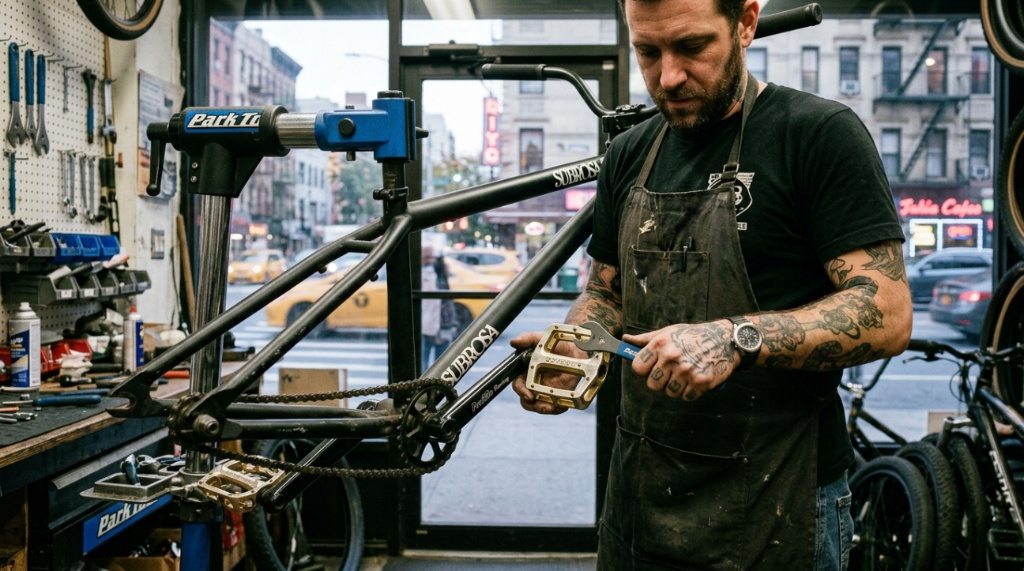
When you ask a sales associate to see a pedal, you shouldn’t just look at the color. Here is a quick inspection checklist to run through before you buy.
- Spin the spindle: It should rotate smoothly but with slight resistance. If it spins like a fidget spinner with a loud crunching sound, the bearings are dry or full of grit.
- Check pin length: Measure the exposed pin height. If it is less than 3mm, it won’t grip well. Most good pedals offer 4-5mm of bite.
- Look at the spindle material: Is it hollow chromoly or solid steel? Hollow spindles are lighter but can sometimes bend more easily in the wrong application. Solid steel spindles are the standard for strength.
- Check the pedal body seams: Look for injection molding lines or rough casting marks. High-quality pedals are finished cleanly, indicating better manufacturing tolerances.
Conclusion
Finding the right pedals in NYC comes down to balancing your riding style, the local environment, and your budget. Prioritize durability and grip over weight, and always check the spindle size before purchasing. While it might be tempting to buy the cheapest option, quality pedals are an investment in your safety and performance. Visit a reputable local bike shop where you can physically test the product, and make sure the pins and bearings are serviceable. With the right set of pedals, you will have the confidence to tackle anything New York’s streets throw at you.
Frequently Asked Questions
Can I use mountain bike pedals on a BMX bike?
Technically, if they have the same 9/16″ thread, they will fit, but they are not recommended. MTB pedals are often wider and heavier, and they usually have a different pin profile that isn’t suited for the high impact of BMX street or park riding.
How often should I replace my BMX pedals?
There is no set timeline. Replace pedals when the pins are too worn to grip your shoes or when the bearings develop a rough grind. For aggressive street riders in NYC, this might be every 6-8 months. For casual riders, they could last years.
Are plastic pedals safer than metal pedals?
Yes and no. Plastic pedals with molded tread are safer for your shins because they are softer than metal pin hits. However, a plastic pedal with metal pins still hurts. For overall safety, the grip prevents slips, which is the biggest hazard.
What is the difference between sealed bearings and loose ball bearings in pedals?
Sealed bearings are enclosed cartridges that keep dust and water out, requiring less maintenance. Loose ball bearings are smaller, individual balls running in a race, which are cheaper to replace but wear out faster in gritty urban conditions. For NYC, sealed is the safer choice.